
Have you ever wondered if someone could just… start their own country? Like, wake up one morning, grab a flag, make a constitution, and say, “Welcome to my nation”? 🏴☠️
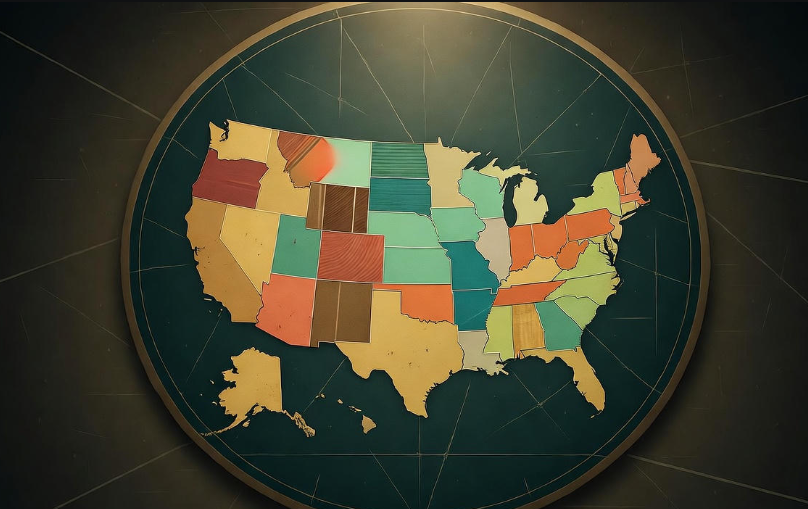
Well, in America — the land of big dreams and endless creativity — some people actually did. These are called micronations, tiny self-declared “countries” that exist within the United States but aren’t officially recognized by any government. They have kings, presidents, flags, and even passports! Some are made as jokes, others as art, and a few — surprisingly — are serious political statements.
Let’s take a deep dive inside some of America’s strangest micronations, their weirdest rules, and the stories that make them unforgettable.
What exactly is a micronation?
A micronation is basically a small, self-declared country that claims independence but isn’t legally recognized by any other government. Think of it as part fantasy, part protest, and part social experiment. Unlike regular countries, they don’t have armies or tax systems (thankfully 😅), but they often have official flags, leaders, and websites.
| Term | Meaning |
|---|---|
| Micronation | A self-proclaimed independent territory not recognized officially |
| Macronation | Real, recognized countries like the USA or France |
| Founder | The person who creates and governs the micronation |
| Purpose | Usually for fun, art, protest, or community |
1. The Republic of Molossia (Nevada) 🇳🇻
Let’s start with perhaps the most famous of them all — the Republic of Molossia.
Founded by Kevin Baugh in 1977, Molossia is located near Dayton, Nevada. It covers just over an acre of land, yet it has its own currency (based on cookie dough!), a national anthem, and even strict border control.
Kevin, who proudly wears a uniform decorated with medals, calls himself His Excellency President Kevin Baugh. Visitors can take tours — but remember, don’t bring “snakes, catfish, or onion-flavored rings” because those are banned! 😄
Molossia even claims to be at war with East Germany (yes, the one that ended in 1990), purely for fun. It’s part theater, part tourism, and 100% delightful.
2. The Conch Republic (Key West, Florida) 🌴🐚
Back in 1982, the U.S. Border Patrol set up a roadblock near the Florida Keys to stop drug trafficking. It caused massive traffic jams and hurt local tourism. The residents of Key West got fed up and decided to secede — forming the Conch Republic!
Led by Mayor Dennis Wardlow, they declared independence as a protest. After one minute of “freedom,” they surrendered and demanded foreign aid from the U.S. 😆
Today, the Conch Republic is more of a fun cultural symbol. They have passports, parades, and a yearly celebration called “Independence Day.” You can even become a citizen for a small fee!
3. The Kingdom of North Dumpling (Connecticut) 🏰
Imagine owning your own island and turning it into a country — that’s exactly what Dean Kamen, the inventor of the Segway, did.
North Dumpling Island is just off the coast of Connecticut. When Kamen couldn’t get permission to build a wind turbine, he jokingly declared independence and named it the Kingdom of North Dumpling.
He even has his own currency (“Dumplings”), a constitution, and an anthem. What’s wild is that he signed a “non-aggression pact” with his friend — President George H. W. Bush.
So yes, technically, the U.S. and North Dumpling are on peaceful terms.
4. The Republic of Slowjamastan (California) 🎶
Now here’s a modern twist. In 2021, radio DJ Randy “R Dub!” Williams created the Republic of Slowjamastan in the California desert.
The micronation is built around his love for slow jam music and humor. He calls himself the “Sultan of Slowjamastan,” and his laws are hilariously creative — Crocs are banned, and you can’t use the word “moist.”
Slowjamastan even issues ID cards, has border signs, and holds public ceremonies. It’s gained global fame for being both ridiculous and oddly well-organized.
5. The Principality of Islandia (Florida) 🌊
Islandia was an attempt by residents of Florida’s Biscayne Bay to form their own kingdom in the 1960s. They wanted to stop the area from being turned into a national park.
Their plan failed — the U.S. government eventually made it Biscayne National Park — but the name “Islandia” still appears on some old maps. It’s a reminder that sometimes micronations are born out of real political frustration.
6. The Aerican Empire (Montreal + Internet) 🚀
Though its “capital” is technically a backyard in Canada, the Aerican Empire claims land on the Moon, Mars, and even an imaginary planet called “The Great Blob.”
It also has citizens from the U.S. and all over the world. Founded in 1987 by Eric Lis, this micronation exists mainly online. They issue passports, hold elections, and celebrate their national holiday — “Revolution Day” — on May 8.
Their motto says it all: “The Empire exists to facilitate the growth of a sillier future.”
7. The Republic of Zaqistan (Utah) 🏜️
Deep in the Utah desert, you’ll find a few bright yellow signs reading “Welcome to the Republic of Zaqistan.”
Created by artist Zaq Landsberg in 2005, Zaqistan started as an art project but grew into a playful commentary on borders and identity.
The land (purchased legally on eBay!) spans about two acres. It has a border checkpoint, flags, and a motto: “Something from nothing.”
Visitors can get passports stamped, but you’ll need a 4×4 vehicle to reach it — it’s that remote.
8. The Republic of Minerva (Pacific Ocean, American connection) 🌊
Although not on U.S. soil, the Republic of Minerva deserves a mention. It was founded by American millionaire Michael Oliver in 1972, who tried to build an island nation on a coral reef between Fiji and Tonga.
He even poured sand to raise the land, declared independence, and made plans for a libertarian utopia with no taxes.
However, Tonga’s king sent troops to reclaim it — ending Minerva’s short dream of freedom. Still, the idea inspired future micronations to think big.
Why do people create micronations? 🤔
Here’s the thing — people create micronations for many reasons:
| Reason | Explanation |
|---|---|
| Protest | To express political disagreement (like the Conch Republic) |
| Art or Humor | As creative or satirical projects (like Zaqistan or Slowjamastan) |
| Personal Freedom | To live by their own rules and ideals |
| Community Building | To connect like-minded people worldwide |
| Tourism and Attention | To attract visitors or online fame |
Most founders know they aren’t creating a real country. What they’re really doing is expressing identity, creativity, or frustration with modern society — and doing it in a way that’s fun, peaceful, and sometimes deeply symbolic.
The Legal Side of Micronations ⚖️
Technically, the U.S. Constitution doesn’t allow states or individuals to declare independence. So micronations are not legally valid, but as long as they don’t break any laws or try to use fake passports for fraud, authorities usually ignore them.
It’s all about harmless fun — a mix of imagination and personal expression.
Famous Micronation Features Table
| Feature | Example | Description |
|---|---|---|
| Flag | Molossia’s blue-green flag | Represents identity and sovereignty |
| Currency | Cookie Dough (Molossia) | Used for symbolic trade |
| Passport | Conch Republic | Souvenir-style citizenship document |
| Leader Title | Sultan, President, King | Depends on founder’s creativity |
| Laws | “No Crocs allowed” (Slowjamastan) | Usually humorous or symbolic |
A deeper message beneath the humor 💡
While most of these micronations are funny or quirky, there’s a serious undertone behind them. They reflect people’s desire to feel in control of their world — to build something small but meaningful in a chaotic society.
It’s about belonging, expression, and freedom — values that America itself was built on.
Fun Facts About U.S. Micronations 🤯
-
Molossia celebrates National Mustache Day every year.
-
Slowjamastan has over 20,000 online “citizens.”
-
The Conch Republic has its own “navy” — mostly local boats with funny flags.
-
North Dumpling Island runs entirely on renewable energy.
-
Zaqistan’s population is technically zero — no one lives there full-time.
Are micronations the future of independence? 🌍
Probably not in a political sense. But as digital spaces grow, people are creating “virtual micronations” — online communities with flags, leaders, and cultures. It’s possible that in the future, citizenship won’t be just about where you live, but also where you belong emotionally and ideologically.
Micronations might just be the first glimpse of that idea.
Frequently Asked Questions (FAQs)
Q1: Are micronations illegal in the U.S.?
No. As long as they don’t violate any laws (like tax evasion or fraud), they’re perfectly fine to exist as art or fun communities.
Q2: Can I start my own micronation?
Technically yes! If you own land, create symbols, and set up some rules, you can call it whatever you like. Just don’t expect the United Nations to send you an invite. 😄
Q3: Do people actually live in these micronations?
A few do — like in Molossia or North Dumpling — but most are symbolic, not full-time residences.
Q4: Can I visit a micronation?
Yes! Some, like Molossia or the Conch Republic, even offer tours and issue fake passports to visitors.
Q5: What’s the largest micronation in America?
In terms of recognition and structure, the Republic of Molossia is considered the most organized and well-known.
Final Thoughts 🌎
America’s strangest micronations are proof that imagination has no borders. Whether they’re acts of rebellion, humor, or hope, they all celebrate something deeply human — the urge to create, to belong, and to dream of a world that’s truly our own.
Maybe one day, you’ll wake up and decide to start your own too. Just make sure you have a flag, a funny law, and maybe a national snack. 🍪
Because who knows? Your backyard might just become the next great republic.