
Have you ever dreamt of ruling your own country? Would you like to design your own flag, create your own laws, or even print your own money? Incredibly, this is not as impossible as it may sound – thousands of people around the world have created their own micronations. These small, self-declared nations are not recognized by any major governments, but they are real projects – often started by dedicated individuals who want to showcase their creativity, political ideas, or just have fun.
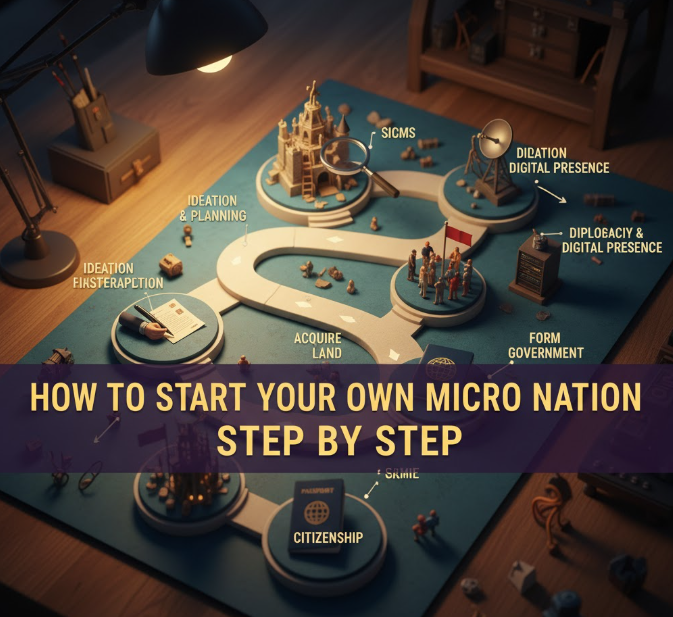
Starting your own micronation is much simpler than you might think. You do not need millions of dollars or a large piece of the land to get a kickstart. Some micronations are fully online projects, while others claim small pieces of land, artificial islands, or even abandoned buildings. In this guide, you will learn everything you need to know about creating your own micronation.
What is a Micronation, Exactly?
Before we dive into the step-by-step guide, let us first clarify what a micronation really is. A micronation is a small entity that regards itself as an independent nation but is not accepted as such by the governments of the world or major international organizations such as the United Nations. This is not to be confused with small countries, such as Monaco and San Marino, which are small but real nations with international recognition.
There is no single definition of a micronation – they come in all shapes and sizes. Some micronations are serious political projects designed to create a new form of government. Others are artistic projects, educational experiments, or even just jokes. The only thing that distinguishes a micronation from a genuine country is recognition by the international community.
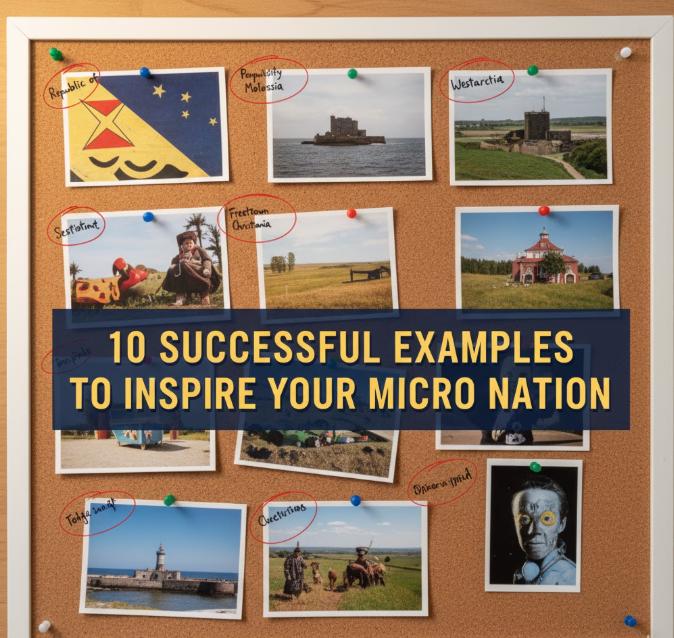
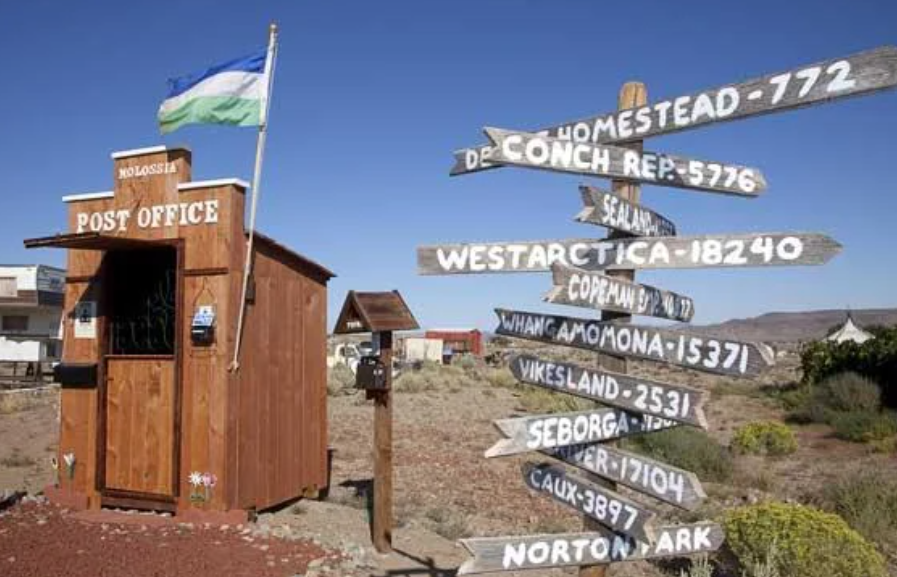
Well-known examples are the Principality of Sealand, a tiny nation located on an old military platform off the shores of England, and the Republic of Molossia in Nevada that has its own currency, customs offices and postal service. These projects demonstrate that while micronations might lack real political muscle, they can be fascinating, imaginative endeavors.
Why Micronations Start
There are many different reasons people start micronations. Others do it as a political statement, attempting to show how other forms of society might be organized or to protest against existing governments. For some, it is an art project or a piece of performance art which challenges our beliefs around nations and borders.
A lot of micronationalists are into history or politics and want practical experience with ideas like constitutional law, diplomacy, governance. Building a micronation allows them to get their hands dirty with these ideas, rather than just talking about them. For others, it’s just a fun hobby that is equal parts creativity and community building, imagination stretched so much that you can begin to see its seams.
Whatever your reason, founding a micronation can teach you about government, law, culture and international relations. It’s also a fun way to share yourself with the world and meet new, like-minded people from all corners of the globe who are just as passionate as you.
Choose Your Territory Carefully
A micronation’s gotta have land, and your project is no exception. This is often the hardest part of establishing a micronation, as most land on Earth is already claimed by real countries. You have at least a few things to consider, pros and cons alike.
Your Own Property
The simplest route is this: Claim your den, apartment or property you already own as the territory of your micronation. It spawned many successful micronations. Consider the Republic of Molossia, which is located on just over an acre owned by its president, Kevin Baugh.
Have in mind that, even if you declare independence, in the eyes of the law you’re still under sway of where your land rests. And you will still have to pay taxes and abide by local laws. But you can configure the rules, customs and culture within your space.
Online Territory
Micronations have also emerged in the digital era: some contemporary micronations are established online. These “virtual micronations” have their own websites, web communities and citizens who are active on forums or social media. This one does not occupy any physical space, and it can draw people from all over the country immediately.
Like, virtual micronations can still have governments and laws and economies and culture — they just exist on the internet. If you’re more interested in the political and social aspects of nation-building than actual territory, this is great!
Unclaimed Land
There is very little unclaimed land remaining in the world, but it does exist. Terra nullius is a legal term for land that no nation has staked its claim to. Examples are Bir Tawil, a territory between Egypt and Sudan, and sections of Antarctica.
The problem is, these territories are unclaimed for good reasons — they tend to be remote or hostile or protected by international treaty. It’s technically possible to claim unclaimed land, but it is extremely hard and expensive in practice.
Artificial Structures
Some colorful micronationalists have constructed or claimed buildings. The best known is Sealand, which bases itself in an old World War II sea fort. Other ideas have included seasteading communities constructed on floating platforms in international waters.
These choices are costly and legally contested, but they also provide the most autonomy as they could possibly exist outside of any country’s territorial waters.
| Type | Difficulty | Cost | Autonomy Level | Best For |
|---|---|---|---|---|
| Your Own Property | Easy | Low | Low | Beginner/Hobby |
| Online Territory | Very Easy | Very Low | Medium | Communities |
| Unclaimed Land | Very Hard | High | High | Serious Projects |
| Artificial Structures | Extremely Hard | Very High | Very High | Long Term |
Design Your Government Structure
Now the fun part: You get to decide how your micronation is going to be run. Essentially, you’re building a constitution and government from the ground up. Note what sort of leader you should be and how to allot power.
Types of Government to Consider
You might be an absolute ruler and have complete control over your micronation. This is the most basic structure and allows you to take fast decisions of your own without having to consult anyone. Most micronations begin as monarchies, since the founder usually becomes ruler.
Democracy is another alternative in which voters go to the polls to decide on important matters or choose representatives. This takes some more organization, but can bring in citizens who will want a say in the government. You will have to invent voting systems and perhaps political parties.
Some choose dictatorship (in which one person has total power) while others elect to experiment with unique systems such as technocracy (expert rule) or even anarchy (no central government whatsoever). You can’t make a bad choice — just choose the one that corresponds with your vision and values.
Create Your Basic Laws
Every nation needs rules. Begin by drafting a constitution or basic legal code. This document should outline:
- How leaders are chosen
- What rights citizens have
- What actions may or must be done there
- How laws can be changed
- How disputes are resolved
You don’t need a 100-page document. Some established micronations appear in constitutions only a few pages long. Focus on the most important principles, and you can always add more specific laws later.
Reflect on what’s different about your legal system. Perhaps your micronation guarantees rights that you believe are absent elsewhere, or maybe you struck laws that you consider to be unnecessary. This is your opportunity to co-create the world you always wanted.
Create National Symbols That Reflect Your Vision
Each nation has symbols that stand for its identity and priorities as a nation. Your micronation needs these too. National symbols provide a sense of legitimacy, something citizens can identify with.
Design Your Flag
Your flag is likely the single most important national symbol you have. It should be easy to spot from a distance, but meaningful and emblematic of the things you believe in. Take a look at current flags for inspiration, but make sure your entry is an original.
There are many fun free tools online that make it easy to design flags. Limit it to no more than two or three colors and avoid intricate symbols or text that will not be readable while the flag is raised. Popular features are stripes, stars, crosses and geometrical figures.
Think about color meanings. Blue is often symbolic of freedom or water, red can be a symbol of courage or revolution, green represents nature and white stands for peace. Select colors that represent the principles of your micronation.
Write a National Anthem
There’s some sense of emotion in a national anthem to flesh out your lifeless micronation. It doesn’t need to be complicated — even a hummable tune with well-considered lyrics will do the trick. You might write a song, find an existing melody to pair with new words or ask a musician for help.
Your anthem should reflect your national values and be something citizens can feel proud of. It could narrate your nation’s origin story, celebrate its territory or simply explain what makes your micronation unique.
Choose a National Motto
A motto is a brief phrase that sums up the spirit of your country. Best-known examples include “Liberty, Equality, Fraternity” (France) and “E Pluribus Unum” (USA). Your slogan could be serious, funny or inspiring — you can make it whatever best captures the spirit of your micronation.
Keep it short and memorable. The greatest mottos are a single-word or short phrase that carries with it some great weight. You could have your own language or even pick Latin, which has a more traditional, official vibe.
Design Other Symbols
Think about drawing up a national emblem or coat of arms, selecting a national animal or plant, figuring out what the national colors might be and even nominating a food to be named as the national dish, or choosing a sport that deserves to carry your country’s name. These are the kinds of specifics that can make your micronation feel more tangible, and provide citizens with different aspects of identity to perform.
Establish Your Economy and Currency
Even small nations need economies. Determine how your micronation deals with its cash and commerce is a natural decision point that can bring richness to the project.
Create Your Own Currency
Of course, the majority of their currency needs to come from somewhere, and a lot of micronations design and print their own. It may be a piece of paper or it can be an intricate coin. Other countries will not accept your currency, however countrymen can trade it amongst themselves or collect it as a souvenir.
Name your currency something special. Valora for Molossia and the Louise at the Kingdom of Talossa. Design notes with national symbols, key figures, or landmarks. You can print money at home, you can write a check, buy some cash at a store, or use your computer to make an electronic transfer.
A few micronations peg their money to a real-world currency. You could, for instance, say that the value of a unit of your currency is one US dollar. This makes it more convenient to value, and trade.
Build Economic Systems
Consider how your economy will function. Will you have businesses? Are residents allowed to trade goods and services with each other? Will you collect taxes? Some of these micronations even have booming internal economies, with their own stores, services and trade deals.
Digital micronations or virtual micronations can similarly utilize online micropayment systems, virtual currencies and other game-like systems to monetize the creation of a fictional nation. Real-life micronations may have a tiny gift shop, trickling the sale of national trinkets and stamps to curious visitors or avid collectors.
Consider creating revenue streams. A lot of so-called micronations sell citizenship, passports, noble titles or merchandise to finance their activities. Some are only funded by the personal money of the founder. Be honest about costs and spending.
Write Your Own National History and Culture
Nations are not only governments and flags — they are communities with common narratives and values. Having a rich national story is what’s going to make your micronation interesting and allow citizens of your nation to connect with it.
Craft Your Foundation Story
Every country has a creation myth. When was your micronation founded? What were the circumstances that led to its founding? Who were the founding members? Even if your micronation is just getting off the ground, you can tell a compelling story about why it exists and what it aspires to do.
Some micronations develop detailed mythologies or histories. Complaints are basic, if nothing else. Your founding story can be serious (Philosophical differences led us to declare independence) or funny (a family in-joke gone crazy). Either approach works.
Develop Cultural Traditions
Establish holidays which commemorate significant national events or ideals. It could be a celebration of your founding date, or important figures and events in your history, or even the things that make up your national culture. Holidays provide reasons for citizens to unite and partake.
Think of creating new traditions, rituals or customs. Perhaps your micronation has its own unique way of greeting, saying happy birthday or holding an official ceremony. It’s these little details that make your culture feel like a real, unique place.
Think about arts and entertainment. Do you have a national music, style of cooking, sport or game? Enabling citizens to produce art, music or literature about the micronation enhances a deeper cultural identity.
Record Your History
Record your micronation’s progress in detail. Archive relevant documents, event photos and critical decision histories. The value of such a historical record only increases over time and can be instructive for new citizens to study the country.
Some micronations have established museums or online displays devoted to their history. Some produce newsletters or journals to report on news and accomplishments. Consistent record-keeping also makes your micronation feel more credible and legitimate.
Find and Welcome Citizens
A country without citizens is land and ideas. You will need citizens to help make your micronation a real living entity. Perhaps the most rewarding part of micronation life is building a community.
Set Citizenship Requirements
Determine who can claim citizenship and what they must do to be admitted. There are a few different kinds of micronations: in some, anyone can join; while others have more restrictive admissions policies. You might require people to:
- Fill out an application form
- Pay a citizenship fee
- Consent to be ruled by you and your laws and constitution
- Show genuine interest in participating
- Live on or be in your territory
- Take a citizenship test on your country
Clarify and streamline the process. Citizenship in most micronations is entirely administered online with the use of forms on their website. Be ready to vet participants for the realness of their humanity, not just trolls or bots.
Build Your Community
Pioneer means of communication and participation for citizens. It could be through online forums, social media groups, Discord servers or even regular video meetings. Active neighborhoods engage and bring in new residents.
Organize events and activities. Virtual micronations may offer online games, debates or creativity competitions. Physical micronations could run tours, hold ceremonies or cultural festivals. The more you ask people to do, the more committed they will be.
Recognize and reward active citizens. Some micronations have honor systems, levels of citizenships, or special titles for people who donate a lot. People participate more when they feel appreciated.
Handle Growth Thoughtfully
As your micronation expands, you will encounter new problems. More citizens also mean more opinions, potential conflicts and organizational complexity. Some purposefully remain small enough to be manageable, while others plan on growth.
You’ll want to invent roles or titles for active citizens. You might require a foreign minister to manage ties with other micronations, a cultural minister to put together events or judges to adjudicate disputes. Distributing responsibility prevents you from burning out and gives others ownership.
Connect With the Micronational Community
And you’re not alone in doing so. There are hundreds of other micronations around the world, and there’s a supportive community of so-called micronationalists who compare notes, help each other out and sometimes form alliances.
Join Micronational Organizations
A few institutions unite the micronations and offer them support for new founders. MicroWiki is the largest resource of micronational knowledge and activity on the web. The Grand Unified Micronational is a group of micronations that work together for common goals.
These communities provide advice and answers to questions, while helping you avoid mistakes others have made before you. They’re also great places to meet citizens too, since members visiting these sites are already interested in micronations.
Establish Diplomatic Relations
Micronations often assert independence and seek formal diplomatic recognition, maintaining informal relations with one another. This can be entirely tokenistic, or it could include real collaboration on projects and events.
And by reaching out to other micronations, it shows you’re serious about your project. You could send ambassadors, forge trade agreements or work on cultural events. There are even a few micronations with official diplomatic exchange and embassies.
Attend Micronational Events
The micronational community has meetings and social events. PoliNation is a yearly convention where micronationalists gather face to face, compare experiences and celebrate our respective nations. Going to these events is a chance for you to be rubbing shoulders with more experienced founders and, from whom you can learn.
Virtual events are also popular, such as digital summits, cultural festivals and joint projects. Engaging with the wider world makes your micronation less insular and more part of a global campaign.
Make Your Micronation Official Online
In the digital age this is an absolute must. Since most people will find out about your micronation online, it is important to have a professional internet presence.
Build a Website
Your micronation requires a website to be its official new home online. This doesn’t take much technical ability — many free website builders like Wix, WordPress or Google Sites can be used to create good-looking pages.
Your website should include:
- Information about the history and values of your country
- Your constitution and laws
- Citizenship application forms
- Your flag, anthem and national symbols
- News and updates
- Contact information
Stick to a professional and clean design. Even if your micronation is satirical to some extent, a good website looks more like the real deal and will bring in people with similar intentions.
Create Social Media Accounts
Set up your micronation across major social media platforms. Facebook, Instagram, Twitter and YouTube let you update people instantly, rally supporters around a cause, and reach new supporters through friends sharing with friends. Posting consistently gets people engaged and demonstrates that your nation is alive.
Share photos of your land, introduce new citizens, make posts about national holidays or what’s on your mind. Using social media can make your micronation seem a bit more real and draw in people who may want to join.
Document Your Nation’s Growth
Make a page on MicroWiki and write down your micronation’s history, government system, and culture. This free-controlled encyclopedia is often the first source people refer to when studying micronations. A well-written article adds credibility and makes it easier for people to find you.
Keep your online presence updated. There’s nothing that makes a micronation look abandoned than outdated websites or dead social media accounts. Frequent updates demonstrate that your project is alive and one worth being a part of.
Deal With Legal Realities Carefully
Here’s the cold, hard truth: Your micronation won’t be recognized as an actual country by any legitimate governments. You need to know what the courts are really doing (or not) so that you don’t get into serious trouble.
Real Laws Still Apply to You
No matter what you say, by law, you are a legal citizen of the country in which you live or have territory. You still have to pay taxes, abide by the local laws and be respectful toward property rights. You can get into all kinds of legal trouble by ignoring laws, including some hefty fines and even arrest.
Consider your micronation as a project or organization rather than something akin to a full-fledged nation-state. This way of thinking keeps you centered and stops you from clashing with the authorities. Like I said, most governments will not care if you establish a harmless micronation, but many will respond if you break the law.
Don’t Commit Fraud or Deception
Never use your micronation as a tool to lie to people or defraud them. Some people have attempted to use counterfeit micronation passports for travel, declaring tax exemption on the basis of “sovereignty” or selling fake titles to dupe people. They are criminal and wrong.
Be clear about what your micronation does. If you sell citizenship, passports or titles, well, then make it clear they are something for fun and have no legal basis. Transparency prevents legal trouble and keeps the trust of your community.
Respect Property and International Law
Don’t lay claim to land you neither own nor have permission to be on. Don’t mess with other people’s property or rights. If you’ve set up a micronation in your own yard, fine — your claims are confined to the ground beneath you.
International waters and unclaimed territories are legally murky. Such countries do have international law rules and before trying to form a micronation in these parts look it up. There are cost and legal barriers that are usually too high for individual founders.
How to Keep Your Micronation Happening and Growing
Create a micronation. It’s really fun to start building a micronation, but to have one that encapsulates the test of time is an energetic endeavor. Most micronations crumble in their first year, as founders’ enthusiasm wanes or they are too quickly swamped.
Set Realistic Goals
Do not attempt to do all the things simultaneously. Begin with basics — land, government, symbols — and then slowly build. Establish achievable, short-term goals, like “recruit 10 citizens this month” or “create three national holidays.”
Long-term goals could be constructing a physical building on your territory, hosting your first IRL event or getting to 100 citizens. When it goes a bit haywire, you get frustrated and exhausted. Breaking your vision into steps helps you stay inspired and not burnt out.
Stay Creative and Flexible
As you figure out what works and does not work, your micronation will grow. Be ready to amend laws, adjust symbols, even if it means remaking government. The most successful micronations evolve and grow.
Never stop thinking of new ways to involve citizens and create demand. Start new ventures, establish traditions or simply stake your claim. Micronations that do not develop will lose citizens to other, more active projects.
Connect With Your Purpose
Don’t forget why you created your micronation in the first place. Whether it’s using your work to express political views, finding a creative outlet or just having fun, reconnecting with why you started keeps you inspired in difficult times.
Celebrate milestones and achievements. Once you’ve reached 50 citizens, finished writing and made your constitution ‘Active’ or when you have your first national holiday, take a moment to really acknowledge each of those milestones. Success breeds success and gets more attention.
Common Mistakes to Avoid
The benefit of learning from others’ mistakes is that it saves you time and frustration. Here are issues that typically torpedo new micronations:
Taking yourself too seriously. If you’re too uptight, you turn off potential citizens or make yourself a target for jokes. Though you should be passionate, maintaining some humor and a little perspective makes your project more approachable. Balance seriousness with self-awareness.
Ignoring your citizens. If you look the other way from applications, fail to answer questions and don’t delegate decisions, they’ll leave. Active leadership and communication hold communities intact.
Making things too complicated. A super complicated micronation is overwhelming for newbies. Begin with the simplest components and grow more complex as you become familiar. Lengthy, complex constitutions or arcane government structures or citizenship processes can scare people off.
Expecting recognition. Expecting actual governments to start recognizing you will just lead to disappointment. Remember that your micronation is a project or community, not an actual state. Enjoy the process and don’t ask for something you can’t earn.
Breaking real laws. Violate real laws and you are in danger of losing your micronation — or worse. Remember to follow only real legal establishments in the country of your residence and business.
Resources to Help You Succeed
You don’t need to work everything out by yourself. There are many resources available to help new founders of micronations:
MicroWiki has information on thousands of real-life and fictional micronations, constitutional templates you can use as a basis for your nation, and active forums where you can ask questions or seek the advice of veteran micronationalists.
Micronational Forum Network: A link to all the micronations through various discussion forums where leaders discuss strategies and coordinate work.
Vexillology sites like Flag Maker & Print that make it easy to design good-looking flags.
Constitution templates from other micronations to help you draft your legal documents. You can even modify these to suit your vision and not go for an exact replica.
Micronational YouTube channels record other founders’ successes and failures. Fans of the series can watch along for realistic and creative ideas.
Online printing services make it easier than ever to print your own professional looking money, stamps or other official documents. These physical items will lend a more-real feel to your micronation.
Frequently Asked Questions
Is starting a micronation legal?
Yes, initiating a micronation is legal as it is considered a hobby or creative project. But your micronation won’t be legally recognized, and you’ll still have to obey all the laws in the place where you live. Think of it more as making a club or something, not an actual country.
What is the amount of money required to establish a micronation?
You can begin your own micronation for free as long as everything is based online and you make digital resources. But many spend money on website hosting, printing currency and documents or buying domain names. Anticipate that costs, depending on your ambitions, will average between nothing and a few hundred dollars.
Do I need my country government’s permission?
You don’t need anyone’s permission to declare your living room or the internet a micronation for creative purposes. The trouble is, you can’t secede from your country at all, or cease obeying its laws. The majority of governments simply ignore benign micronations altogether.
Will I be able to travel with my micronation’s passport internationally?
No, micronation passports have no official use in international travel. They’re novelty items, or collectible pieces only. When you are traveling always use the passport of your actual country.
How many citizens do I need to start with?
You can even begin with just a founder — yourself — and the sole citizen. Many of the successful micronations started in this way, expanding slowly over time. No minimum — start small and grow with time.
How is a micronation distinct from secession?
There is something more fundamental about secession, and that is genuinely trying to break away from an existing country and start a new country, which you are not allowed to do in most nations under any international law. Micronations are whimsical endeavors that don’t genuinely threaten anyone’s sovereignty. About the only real difference is that we acknowledge our micronations for what they are, projects rather than serious political entities.
How do I profit from my own micronation?
Other micronations may have a relatively small economy, use only barter or local currency, and rely largely on donations of food, money or other necessities from supporters. Selling citizenship, passports, titles or merchandise is legal as long as you’re honest with people that they are novelties and don’t have official status. A lot of founders seem to put out more money than they take in, treating their projects as a (somewhat expensive) hobby.
How can I get foreign states to recognize my micronation?
Let’s face it; no internationally recognized sovereign nation will recognize your micronation. Recognition is conditional upon fulfillment of certain criteria, such as territorial definition, permanent population, effective government and capacity to enter into relations with other states. But you should work on being acknowledged by other micronations and growing your community instead.
Your Micronation Journey Starts Now
The result is an adventure that combines creativity with community-building, and political experimentation. Whether you are building a serious political project or just having fun with your friends, it instructs you, through experience, about government (how people organize themselves politically), culture (what gets produced out of that organization) and humanity.
The wonderful thing about micronations is that there is no one correct way to do it. Your project can be as simple or elaborate, as stately or silly (or both) as your personality dictates, and either a physical object or an online presence — to the extent that you want it to be. The sky’s the limit when it comes to creativity and effort.
Thousands of people from around the world have taken this journey before you, and they’ve built everything from joke nations that stood for a weekend to decades-old micronations with hundreds of citizens and detailed cultures. Some of these have become famous enough to be the subjects of documentaries and newspaper articles, while others are small projects shared among friends.
Most important is that you begin. Choose your territory, create your flag, write your first laws and announce to the world that you’re a micronation! You will get things wrong, have setbacks and possibly change your plans several times over. It’s all part of the course. Every successful micronation was once in the very position that you are now: a form of glimmer, an idea and enough madness to try something else.
The world of “micronationalism” encourages new members and embraces variety. Your unique vision and insight will contribute phenomenally to the vibrant tapestry of micronations worldwide. Whether your country stays for months or for years, you will learn, create and meet some amazing people who share the same spirit of adventure as you.
So gather your ideas, stake out your turf, and take that first step. Your micronation is waiting, and a whole world of opportunity opens up with it. Welcome to the high-stakes, imagination-fueled and sometimes surreal world of micronations. Your reign begins today.