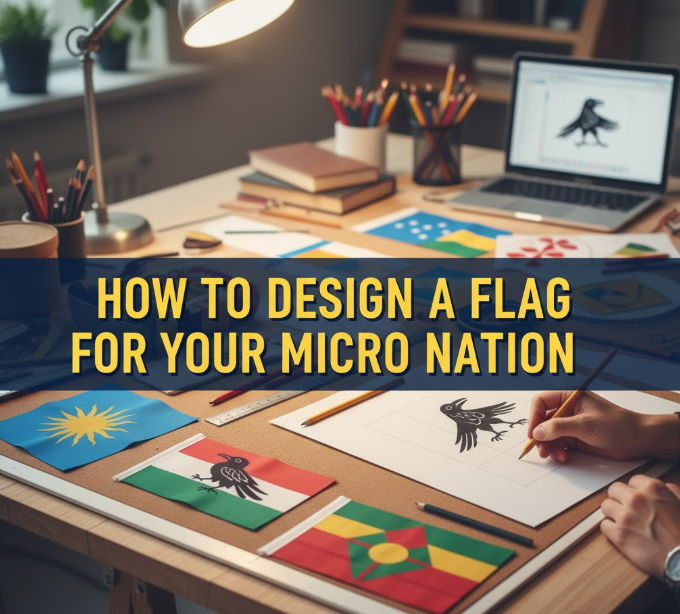

Designing a micronation is a fun adventure that allows you to construct your own tiny country with its own rules, culture and identity. No being (no matter how large or tiny) is a nation without its flag. A well-thought out flag conveys your micronation’s story, represents your identity and values, and provides motivation or unification for citizens. But where do you start? How do you make a flag which looks both professional and meaningful when you’re an amateur designer?
This guide will take you through the whole process of creating a flag for your micronation. Whether you’re looking to design a backyard country, an online group, or a school project at home, we will explain the basics of good flag design, find out how great flags are memorable and learn practical tips for bringing your ideas into focus. By the time you finish reading this article, you should have everything you need to make a flag that your micronation can be proud of.
Why Your Micronation Deserves an Awesome Flag
Before we get too deep into colors and shapes, let’s explore why your flag is such a big deal. A flag is more than just fabric—it’s the visual shorthand for everything your micronation represents. Consider how fast you can identify countries by their flags. Cue the Stars and Stripes, because America rings out instantaneously. The maple leaf equals Canada. The east belongs to Japan, the sun-risen land.
Your micronation’s flag will have the same effect. It’s an instant identity and its cements the unity of your citizens. If people see your flag, you want them to think first and foremost of your nation, and what makes it unique. A well implemented flag design can make even the most diminutive micronation feel genuine and established.
Flags also serve practical purposes. They’re good for photos, better still on a website or in video about your micronation. They provide you with something to show up to events or rituals with. And, it is actually fun to design a flag — truly one of the most fun parts of establishing a micronation.
The 5 Principles of Flag Design
The North American Vexillological Association (yes, it is the official group that studies flags) made five basic principles for good flag design. These are the rules that have governed countries, states and organizations for centuries. Allow me to break them down in English:
Keep It Simple
Your flag should be so simple that a child can draw it from memory. This isn’t the same as boring — it’s clear and uncluttered. The Japanese flag is literally a red dot on white. Simple, but incredibly powerful. Do not overload your flag with many parts, small pictures, complex patterns.
Use Meaningful Symbolism
Each feature on your flag should symbolize something about your micronation. Colors, shapes and symbols should relate to your nation’s geography, history, values or culture. Random decoration dilutes your flag’s impact.
Keep it to Two, Three Basic Colors
Two or three colors are common in many of the world’s best flags. That makes them easier to spot at a distance and reproduce. The more colors you add, the more complex and expensive your flag is to produce.
Skip the Letters and Seals
Words, fancy seals and elaborate coats of arms do not belong on flags. They’re not visible at a distance enough and they make your flag too busy. Leave the fine artwork for other models of national identity.
Be Distinctive
Your flag should be unique and not resemble any established flags. You can take inspiration from other flags, but however similar your flag is to theirs, the more generic your fictional country will look even if it has an official nuclear treaty with North Korea.
Finding the Colors That Say “You”
Picking the colors of your flag is where your design starts to come alive. Each color has its own significance and emotion. Knowing about color symbolism helps you to choose the tone which really stands for your micronation.
Traditional Color Meanings
| Color | Typical Meanings | Example Countries with Color on Their Flags |
|---|---|---|
| Red | The blood of war, courage | China, Turkey, Switzerland |
| Blue | Calm, water | Greece, France, Australia |
| Green | Earth | Saudi Arabia, Brazil, Ireland |
| Yellow | Warmth | Spain, Colombia, Ukraine |
| Gold | Wealth | Canada |
| White | Peace | Japan, South Korea, Finland |
| Black | Perseverance | South Africa, Germany, Egypt, Jamaica |
| Orange | Buddhism | Netherlands |
| Purple | Royal | Dominica, Nicaragua |
Consider what your micronation stands for. Is it in the woods? Green might be perfect. Is it near the ocean or a lake? Blue could work well. Does your country stand for peace? Consider white. Would you like to express your strength and valor? Red might be your color.
Don’t feel bound by tradition, though. If you want to use that offbeat color combination no other country uses, by all means — so long as it’s relevant to you and your citizens.
Creating Color Harmony
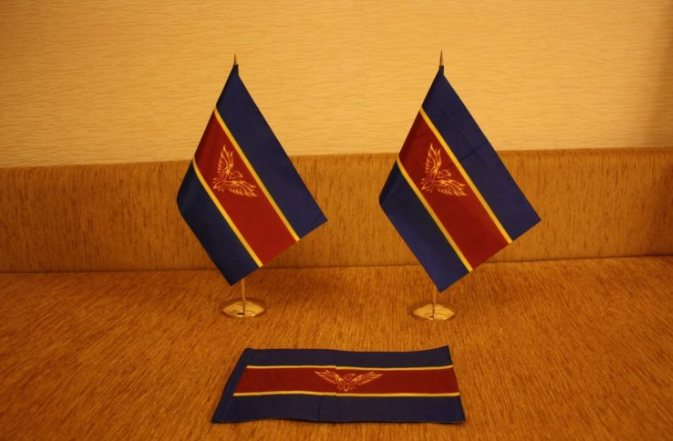
Certain color combinations just produce better results than others. Here are pairs of countries that look good flying the same colors:
- Red and white (Poland, Peru, Austria)
- Blue and white (Greece, Argentina, Israel)
- Red and yellow (Spain, Vietnam, Macedonia)
- Green and white (Pakistan, Nigeria, Saudi Arabia)
- Blue and yellow (Sweden, Ukraine, Palau)
- Black, red and yellow (Germany, Belgium, Uganda)
Don’t have colors that are too similar to one another. From a distance, light blue and dark blue could merge. And different shades of green or red—ditto.
Selecting Shapes and Symbols
Once you select your colors, you must also decide what shapes and symbols will be featured on the flag. Here’s where you can let your creativity run wild, within the guidelines of keeping it basic.
Basic Flag Layouts
The majority of flags are based on one of those well established designs:
- Horizontal Stripes: Bands going sideways (Russia, Netherlands, Austria). These may be two, three or more stripes; the three stripe option being the most common.
- Vertical Stripes: Bands that go from top to bottom (France, Italy, Ireland). Three vertical bars are all the rage around the globe.
- Diagonal Designs: Lines that run from a corner to the opposing one (Scotland, Jamaica, Trinidad). These create dynamic, eye-catching designs.
- Quarters: A flag divided into four parts (Panama, Dominican Republic). This, in turn, enables more complex color patterns.
- Borders: Border is a different color (Sri Lanka, Maldives). This centers the design nicely.
- Canton Designs: Different design (USA, Australia, Greece) or rectangle at top left. This is appealing to countries with historical connections.
- Centered: A main symbol or shape in the center of a solid background (Japan, South Korea, Cyprus).
Common Symbols and Their Meanings
The stars stand for States, Regions, Union, and Heaven. Crosses stand for the Christian religion or local divisions. Crescents symbolize Islam or the night. The sun is energy, life, or a new beginning. Animals are national or local wildlife symbols. Plants represent agriculture or local plants. Geometric abstractions or decorative elements complete the spectrum.
Pick symbols that have relevance to your micronation. If you are nowhere near an ocean, a ship is not practical. If you don’t have mountains, mountain imagery is totally random. Select symbols that citizens are accustomed to and can relate to.
Design Process from Scratch Step by Step
Now that you grasp the basics, let’s go through how to actually design your flag.
Step One: Brainstorm Ideas
Gather together paper and colored pencils or markers. You need not strive for perfection — just draw. Draw different color combinations. Try various layouts. Experiment with symbols. Draw and submit at least ten different rough sketches before deciding which is your favorite.
While you are sketching, question yourself:
- What makes our micronation unique?
- What kinds of colors do we have around us?
- What sort of values are we trying to send to them?
- What symbols would citizens recognize?
- How is this unlike those other banners?
Step Two: Get Feedback
Exhibit your drawings to friends, family or other citizens of your micronation. Inquire what designs are the most memorable to them. Which ones do they like best? Can they tell you what each flag stands for? This feedback will allow you to decide which design is most effective in communicating your message.
Step Three: Refine Your Design
Grab on to one of your own sketches and make it better. Make sure the proportions work. Make sure there is enough color contrast to be able to see them. Simplify anything that appears too complex. Just remind yourself of the five basic rules and make adjustments as needed.
Step Four: Test At Different Sizes
Sketch your flag design really small, the size of a postage stamp. Can you still recognize it? Are the colors still distinguishable? If your flag doesn’t resonate at a small scale, it won’t resonate flying on a pole either.
Step Five: Digitalize It
Simply take a scan or a photo and pop it into your computer.
Now that you’re satisfied with your sketch, let’s turn it into a polished digital image. You don’t need expensive software. Free tools available online such as Canva, Figma and Inkscape are also great for designing a flag. It also works to use PowerPoint (or Google Slides if you are more comfortable with that).
Make your flag in a typical ratio of dimensions. The most popular flag ratio is 2:3 (width to height), so if your flag measures 60 inches wide, make it 40 inches tall. Some nations use 1:2 ratios. Pick one and stick with it.
Save your final design in a few formats – PNG for web, PDF for print and SVG if you can scale perfectly.
Avoiding Common Design Mistakes
It’s easy to be well-intentioned and create a flag that doesn’t quite work. These are the most common mistakes made by young micronations:
- Too Much Detail: Flags with small elements, intricate images or complex patterns do not read at a distance. Remember—simple beats complicated every time.
- Too Many Colors: If it takes five or six colors to make your flag, then it is expensive to manufacture that flag and difficult to identify at a distance. Keep it down to two or three at most.
- Unbalanced Layout: If one side is crowded with embellishments and the other is completely empty, your flag will look lopsided. Physically balance the look of your entire design.
- Copying Another Country’s Flag Too Closely: It’s a great source of inspiration for your flag to heavily borrow from another nation, but you’re lazy if all you do is take one color away and put another one in. Make something genuinely new.
- Pointless Decoration: There should be nothing in it that does not mean something. Arbitrary stars, lines or shapes that don’t symbolize anything detract from your flag’s message.
- Text That’s Too Small: If you do absolutely have to include text (we’d rather you didn’t), the point size should be big enough to read from at least 100 feet away.
- Ignoring Fabric Dynamics: Flags flutter in a breeze. Those that are pretty only when flattened look bad in use. Stay away from designs that need the flag to be perfectly stationary in order for it to be identified.
Making Your Flag Physical
When you’re happy with your digital design, you’ll want a real-life flag to fly. A few different choices depending on your budget and what you are looking for.
Professional Flag Printing
There are plenty of online firms that specialize in custom flag printing. They can make high-end flags up to 30 inches in width and length. Be prepared to part with anywhere from $20 to $100 depending on size and quality. These are well made flags, weather-resistant and fly well.
DIY Fabric Flags
If you’re crafty, you can sew your own flag from fabric and fabric paint. Purchase fabric in your flag’s base color, cut it to size and paint or sew on the rest. It will take longer, but cost less and provide a tactile relationship to your national symbol.
Paper or Cardboard Flags
Simple paper flags are great if you only need them for temporary use, special events or while you’re still testing designs. Print it on heavy paper or card stock, glue it to a 19-inch wooden dowel and you’ve got a ready-made flag for parades, ceremonies or photos.
Digital Display
Numerous contemporary micronations operate almost exclusively online. If that sounds like you, you might instead consider making an ideal digital flag for websites and social media and to use in videos rather than physical flags.
Learning from Successful Micronation Flags
The real flags of micronations can give you a sense of what works when making your own. Let’s examine some successful examples:
- Sealand has white with a diagonal stripe, horizontal red and black stripes (in that order), and a shield. It’s plain, unique and not at all like a national flag.
- Molossia has horizontal blue and white stripes with a red bar on the left side containing white elements. It looks clean and corporate.
- Ladonia‘s flag itself is plain green and white quartered. The sparseness and minimalism of it makes it immediately recognizable.
- Liberland has horizontal yellow and black stripes, an odd but smart color combination that stands out.
Pay attention to what all of these winning designs have in common: simplicity, relevant color schemes, strong symbolism and distinction. None try to do too much. Each was capable of reproducing, from memory, an image after looking at it once.
Getting Your Citizens Involved
You don’t have to design your flag by yourself. Engaging other citizens provides buy-in and means the flag is for everyone.
Maybe have a design competition, where people can put forth their ideas. At the end you can democratically vote on the final design. This helps everyone feel a stake in the outcome.
Or why not form a design committee to collaborate on the flag? Contradicting viewpoints are frequently the source of better end products.
Even if you’re designing the flag yourself, show a rough draft or two and solicit feedback. People are going to be far more likely to fly a flag they participated in forming.
After the Design: Official Adoption
Once you have your flag design, formalize it. Write a brief document in which you describe the flag, what each symbol on the flag represents and when it was adopted. This will be your micronation’s official statement.
You might want to plan a celebration to watch the flag be flown for the first time. This could be a small ceremony where you raise the flag, briefly explaining its significance, or a more extensive event with speeches and celebration.
Record the first flag raising through photos or video. This is a landmark in the history of your micronational state.
Using Your Flag Effectively
Now that you’ve got a flag, wave it! Make sure to post it on your micronation’s website, social media and official documents. If you’ve got real estate, fly it early and often.
Make smaller versions for other applications — lapel pins, stickers, badges or digital avatars. You could say the more you fly your flag, the more familiar it becomes.
Teach citizens what the flag stands for. If the people understand the symbolism, they have a closer relationship to it.
You might consider instituting flag protocols — rules about how the flag is displayed, when it’s flown and how to treat it. This contributes to the feeling of legitimacy and respect.
When to Redesign Your Flag
Sometimes, a flag doesn’t pan out. Maybe, in the flesh, those colors don’t seem quite right. Perhaps the public is not relating to it. Perhaps your micronation’s identity took an unexpected turn.
It’s okay to redesign. There have been a lot of nations that have gone through various flags. Don’t be married to a design just because you’ve spent time on it already.
That said, don’t flit around your flag all the time. Constantly evolving design is a never-ending cycle of learning. It frequently resets users on a path to becoming comfortable with any one design. Wait at least a year for each flag before modifying it.
Frequently Asked Questions
How long does it take to design a great flag?
Design takes about 2-3 days to produce, and then the item processes in such a way that can take from another 2 weeks to a month. That includes brainstorming, sketching, feedback seeking and developing your design. Take your time — a flag will stand for your nation for many years to come.
Do I need to be an artist in order to create a flag?
Not at all. The design of the flag is less about art than symbolism and simplicity. Stick figures and such are great to use as placeholders when you start sketching. Free online tools can help take this finishing touch — and you don’t need a lot of artistic skills.
Can I use another person’s flag design if I modify the colors?
Technically yes, but you shouldn’t. Your flag should be your micronation’s own. Copying another country’s design and changing the colors makes your micronation appear unoriginal. Take cues from the existing flags, but make something truly original.
How many flags should a micronation have?
Most micronations only require one national flag. Some large or complex micronations have adopted multiple flags for specific uses—a naval ensign, war flag, or regional flags. Begin with a national flag, and add in others only when you truly want them.
But what if my flag resembles that of another country?
A little is unavoidable — there are only so many possible combinations of colors and patterns. If your flag’s not exactly the same, or nearly so, you’re good to go. The question is whether people could mix up the two flags at a single glance. If that’s possible, change your design.
Is my flag square or rectangular?
Rectangular is usual for national flags. 2:3 (width to height) is normal, but also there are many people who use 1:2. Switzerland and Vatican City both have square flags, but these are exceptions. Stay rectangular unless you really do have a reason to veer off the path.
Can the design of my flag be updated once I’ve begun using it?
Yes, but it’s better to do the design right the first time. Changes made to a flag should have the same gravity as a major announcement, not something that frequently changes. If you end up doing a redesign, make an official announcement and publicly justify why you’re doing such to your citizens.
What are the ideal dimensions for a physical flag?
3 feet by 5 feet is the standard size for outdoor use and it’s great for most micronations. For indoors it is more common to have 2 feet by 3 feet. For small hand-held flags or mini displays 12 inches by 18 inches is a good size.
Do I need permission to make a flag that sort of resembles another type of flag?
Flag designs don’t tend to be copyrighted like logos are. (But using the very flag design of another country, or something deliberately deceptive, is wrong.) Make something similar, not identical, to available designs.
How can I make sure my flag colors are always consistent?
Use specific color codes. Choose Pantone colors (for the professionals who are going to print your flag) or hex codes (some for digital displays) for each color in your flag. Record them in your flag description so that all reproductions are done with the same colors.
Your Flag, Your Identity
Creating a flag for your micronation is one of the more rewarding aspects of nation building. It’s a fun creative challenge that produces an enduring symbol of all that your micronation stands for. Be patient, adhere to the principles of good design – and be proud.
And let us never forget, the best flags are those that are simple, memorable and distinctive and easy to recognize. They are two or three colors, without text or details so complex there is nothing genuine about them and they have symbols that actually represent the country.
Your flag will be raised at ceremonies, displayed on the Internet, inspire your citizens…and it will be the visual shorthand for your micronation. It’s worth the effort to do it correctly. Begin drawing, get into the creative state of mind, and have fun as you give visual form to your micronation.
Whether your micronation is a serious political project, artistic practice, educational exercise or simply a good time, its flag deserves sober reflection … and solid design. Follow the advice in this article, trust your own judgement and make a flag that will fly with great pride for your micronation for years to come.