

Ever wondered how tiny self-declared countries — the ones that call themselves micronations — actually choose their leaders? 🤔 It’s not quite like the elections in the United States, or the monarchies of Europe. In fact, it’s often a mix of imagination, symbolism, and real governance — all wrapped into something surprisingly creative.
Let’s take a closer look at how leadership works in these miniature nations. You’ll be surprised how varied and fascinating their systems can be.
What Exactly Is a Micronation?
Before diving into leadership, let’s clear up what we mean by “micronation.” A micronation is a small, self-declared country that claims to be independent but isn’t officially recognized by larger governments or the United Nations. 🌍
They often start as hobbies, political experiments, or even social statements. Some are serious communities with citizens and laws, while others exist mostly online or within someone’s backyard.
Famous examples include the Principality of Sealand, Republic of Molossia, and Empire of Atlantium — each with its own flag, anthem, and form of leadership.
Types of Leadership Systems in Micronations
Micronations are like a box of chocolates — every one of them has its own flavor of government. 🍫 Some mimic real-world systems, while others invent their own. Let’s explore the most common ones.
| Leadership Type | How the Leader Is Chosen | Example Micronations |
|---|---|---|
| Monarchy 👑 | By inheritance, appointment, or self-declaration | Sealand, Principality of Hutt River |
| Republic 🗳️ | Through elections or voting | Molossia, Aerican Empire |
| Dictatorship ⚔️ | Self-appointed or lifetime control | Republic of Kugelmugel |
| Council or Collective 🏛️ | Shared power among founders | Freetown Christiania, Atlantium |
| Theocracy 🙏 | Leadership by religious or spiritual figure | Holy Empire of Reunion |
Each type reflects the founder’s personality and purpose behind creating the micronation.
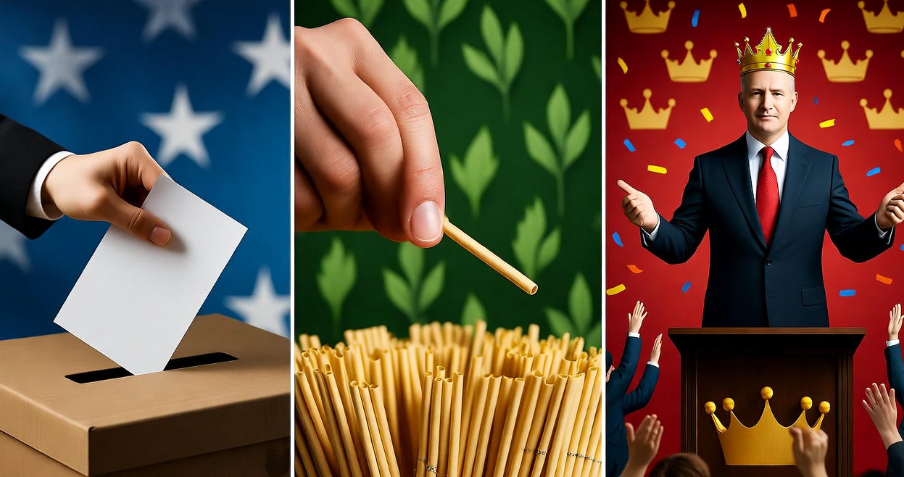
When One Person Declares Themselves the Leader
Many micronations start with a single founder — often someone who just wants to make a statement or experiment with new ideas. In these cases, leadership isn’t chosen by others; it’s claimed. ✋
For example, Prince Michael of Sealand became the ruler after his father, Paddy Roy Bates, took control of an abandoned sea fort and declared it independent in 1967. There was no vote, no council, no ceremony — just a bold declaration and a flag raised over the waves.
This kind of self-declared leadership is very common. Some call themselves kings, others presidents, and a few even choose fun titles like Emperor of the Moon. The beauty of it is — they make their own rules.
Inherited or Family Leadership
In many monarchic micronations, leadership passes down through family lines. 👨👩👦
Take Hutt River Province in Australia (now defunct). It was founded in 1970 by Prince Leonard, who declared his farm independent after a dispute with the government. When he stepped down, his son Prince Graeme inherited the throne.
This approach feels traditional — like royal successions in real countries — but usually with a touch of humor and personal pride.
Elected Leaders: When Citizens Get a Say
Some micronations take democracy seriously — they actually hold elections. 🗳️
In the Republic of Molossia, citizens (mostly family and friends of founder Kevin Baugh) can participate in decision-making. While Kevin remains “President for Life,” elections are occasionally held for fun or ceremonial purposes.
Other micronations, especially online ones like the Aerican Empire, run detailed elections for presidents, senators, or ministers. They hold campaigns, publish manifestos, and even count votes digitally.
It might sound playful, but many of these groups truly value community participation.
Shared Leadership: Councils and Committees
Not all micronations rely on a single leader. Some are governed by councils or small committees of founders.
For instance, the Empire of Atlantium was originally led by multiple founders who shared decision-making. Over time, the role of Emperor became more symbolic, while administrative duties were handled collectively.
This kind of shared leadership helps balance power and makes the project more sustainable. It also allows members to stay involved even if one person steps down.
Spiritual or Symbolic Leadership
A few micronations base their leadership around religion or philosophy. 🙏
The Holy Empire of Reunion, for example, blends spirituality and politics. Its leader serves both as a political ruler and a religious figure, guiding followers in moral and spiritual matters.
Other micronations are inspired by fictional or mythological themes — like fantasy empires, utopian societies, or “space nations” that claim to represent humanity beyond Earth. In those, the “leader” is more symbolic — like a guardian or representative of ideals.
How Do Leadership Transitions Happen?
Micronations rarely have strict succession rules. When a leader retires, passes away, or loses interest, leadership might:
-
Pass to a family member
-
Be voted on by citizens
-
Be dissolved entirely
-
Or restructured by a new founder
For example, after the founder of Hutt River stepped down, his son inherited. But in many internet-based micronations, if the founder disappears, the nation simply fades or reorganizes.
Leadership, in this sense, is less about power — and more about keeping the dream alive. 🌟
Challenges of Choosing Leaders in Micronations
Choosing a leader isn’t always easy, even in a small nation. Here are a few challenges they face:
| Challenge | Explanation |
|---|---|
| Legitimacy | Since no one recognizes them officially, leadership titles hold symbolic power only. |
| Succession | Without clear rules, disputes may arise when a leader steps down. |
| Engagement | In online nations, it’s hard to keep citizens active and voting. |
| Balance of Power | Some founders struggle to share authority with others. |
Despite these issues, most micronations handle leadership transitions peacefully — often with creativity, humor, and community spirit.
Modern Trends in Micronational Leadership
Interestingly, newer micronations (especially digital ones) are becoming more democratic. 🌐
Many use online voting tools, Discord servers, or blockchain systems to record elections transparently. Some even publish “constitutions” or “citizen rights charters.”
This shift shows that micronations are evolving — from personal projects to experimental governance models.
Why Leadership Matters in Micronations
Even if these nations are small or unrecognized, leadership plays a big role in keeping them organized and alive. The leader often acts as:
-
The founder and visionary
-
The spokesperson to outsiders
-
The organizer of events or citizenship drives
-
And sometimes, the entertainer who keeps everyone motivated 😄
Without a strong (or at least passionate) leader, most micronations fade away within months.
Fun Facts About Micronation Leaders
| Fact | Details |
|---|---|
| Longest-serving micronation ruler | Prince Michael of Sealand (since 1967) |
| Youngest micronation leader | Some are teenagers running online states |
| Most creative title | Emperor of the Aerican Empire — who claims to rule “over all the universe, except parts we don’t know about yet” |
| Micronation with most elections | The Aerican Empire holds regular democratic votes for its offices |
These fun details show that even though micronations are small, their leaders are full of big ideas and imagination.
-
🇦🇺 Ever wondered why Australia has so many micro-nations? Find the answer here: Why Australia Has So Many Micronations 🇦🇺
So… How Are Leaders Really Chosen?
If we boil it all down — leadership in micronations comes from one main source: the creator’s will.
It’s not about power, money, or recognition. It’s about vision, creativity, and sometimes even rebellion against conventional systems.
Some leaders rule alone.
Some share power.
Some are elected just for fun.
But in every case — leadership gives shape and meaning to these tiny nations that dare to dream big. 🌏
FAQs About Micronation Leadership
Q1: Do people really take micronation leaders seriously?
A: Some do, especially within their communities. While they’re not officially recognized, their leadership is respected among citizens and followers.
Q2: Can anyone become a micronation leader?
A: Absolutely! All you need is a vision, a name, a flag, and the will to declare independence. Anyone can found a micronation — and lead it.
Q3: Are there conflicts between micronation leaders?
A: Occasionally, yes — usually over territory or titles. But most are friendly debates rather than real political conflicts.
Q4: Do micronations have elections like real countries?
A: Some do! Especially online micronations where citizens can vote using polls or websites.
Q5: Can a micronation leader be overthrown?
A: In theory, yes — but in practice, since most are symbolic, leadership changes usually happen peacefully or by agreement.
Final Thoughts 🌟
In the end, how leaders are chosen in micronations reflects human creativity at its finest. Whether it’s through elections, inheritance, or simple self-declaration, leadership gives these tiny worlds structure and soul.
While they may not appear on world maps, micronations show us that governance isn’t just about borders — it’s about imagination, identity, and community.