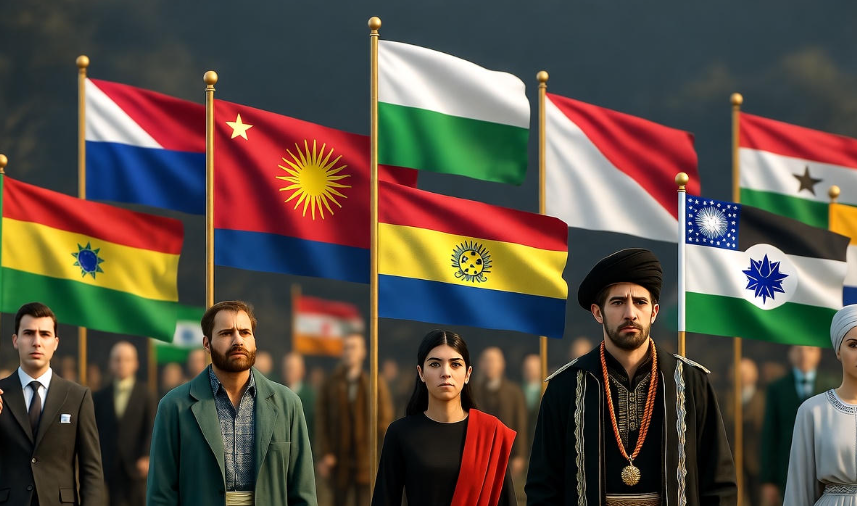

Have you ever imagined creating your own country? 🌍
Believe it or not, some people already did that — and not as a joke. Across the world, there are micronations: tiny self-declared countries that have real citizens, flags, governments, and even passports. While most aren’t recognized officially by the United Nations, they still exist proudly with their own identities.
These micronations might be small, but they carry huge dreams, stories, and a lot of creativity. Let’s explore 12 fascinating micronations that actually have real people and real flags! 🚩
1. The Principality of Sealand
Located on an old sea fort off the coast of England, Sealand is often called the “world’s smallest country.” 🏰
It was founded in 1967 by Paddy Roy Bates, a British man who declared it independent from the UK. Sealand even has its own flag, anthem, currency, and national motto — “E Mare Libertas” (From the Sea, Freedom).
| Fact | Detail |
|---|---|
| Founded | 1967 |
| Location | North Sea, UK coast |
| Population | Around 30 |
| Currency | Sealand Dollar |
| Flag | Red, black, and white horizontal stripes |
Today, Sealand is run by Bates’s family and still claims independence. They even sell titles like “Lord” and “Lady of Sealand” online!
2. Republic of Molossia
Molossia 🇲🇴 (yes, they have their own flag) is located in the Nevada desert, USA. It was founded by Kevin Baugh in 1977, who declared his home and property a sovereign nation.
Molossia has everything a country needs — its own currency (the Valora), customs office, navy, and even a space program (a model rocket one, but still fun!). Kevin Baugh is known as the President of Molossia, and his citizens are his family and close friends.
| Fun Fact | Molossia bans the use of onions and “walruses.” 🐋 (Yes, seriously.) |
3. Principality of Hutt River
In Western Australia, a farmer named Leonard Casley declared his land independent in 1970 after a dispute with the government about wheat quotas. He named it the Principality of Hutt River and crowned himself Prince Leonard. 👑
The micronation had its own stamps, money, and royal titles, and for decades, thousands of tourists visited it each year. Although it officially dissolved in 2020, its story remains legendary in the micronation world.
| Founded | 1970 |
|---|---|
| Location | Western Australia |
| Currency | Hutt River Dollar |
| Motto | “God Save the Prince” |
4. Republic of Užupis
Nestled inside the capital of Lithuania, Vilnius, the Republic of Užupis 🇱🇹 is a small artistic community that declared independence in 1997.
It has its own constitution (displayed on a public wall in many languages), its own flag featuring a hand with a hole in the middle, and even a president.
The constitution includes fun statements like:
“Everyone has the right to be happy,” and “Everyone has the right to be unhappy.”
It’s a creative, peaceful, and artistic community that celebrates freedom of thought.
5. Principality of Seborga
Located in Italy 🇮🇹, Seborga is a picturesque town that claims to be a sovereign principality dating back to medieval times. Citizens there believe their independence was never officially canceled after the 18th century.
They have a prince, a flag (blue and white), and their own currency called the Luigino. Tourists can visit and buy souvenirs stamped with the Seborgan coat of arms.
| Founded (modern) | 1963 |
|---|---|
| Location | Liguria, Italy |
| Currency | Seborga Luigino |
| Population | Around 300 |
6. Kingdom of Talossa
Talossa was founded in 1979 by a 14-year-old boy named Robert Ben Madison in Milwaukee, USA. 🇺🇸
He created a constitution, a made-up language called Talossan, and even a parliament that meets online.
What’s amazing is that the kingdom has hundreds of registered citizens worldwide! Talossa’s flag is red and green with a white star — simple but meaningful. 🌟
| Motto | “Miehenhuoneen ja kuninkuuden valtakunta” (Kingdom of Manhood and Monarchy) |
| Established | 1979 |
| Official Language | Talossan |
7. Grand Duchy of Flandrensis
While most micronations claim land, Flandrensis is unique — it claims Antarctic territory 🌨️ but has no permanent residents. Founded in 2008 by Niels Vermeersch from Belgium, it focuses on environmental protection and climate awareness.
Flandrensis even issues ID cards, passports, and citizenship certificates to eco-conscious people worldwide. 🌱
| Founded | 2008 |
|---|---|
| Claimed Land | Part of Antarctica |
| Motto | “No humans, only nature.” |
| Focus | Environmental diplomacy |
8. Principality of Wy
Wy is one of the funniest micronation stories. 😄
It was created in 2004 by Paul Delprat, an artist in Sydney, Australia, after a dispute with the local council about his driveway! In protest, he declared his home independent as the Principality of Wy.
Wy has an artistic flag, its own passports, and Paul still holds the title of “Prince of Wy.” Even though it’s mostly symbolic, the principality continues to attract curiosity from around the world.
| Location | Sydney, Australia |
| Citizen Count | Around 10 (mostly family) |
| Founded | 2004 |
| Type | Artistic/Political Satire |
9. Kingdom of North Sudan
In 2014, an American man named Jeremiah Heaton traveled to a strip of land between Egypt and Sudan known as Bir Tawil — an unclaimed desert area. 🌵
He planted a flag and declared it the Kingdom of North Sudan, claiming the land so that his daughter could be a “real princess.” 👸
Though not officially recognized, it gained massive media attention. Heaton says his goal is to use the land for agricultural research and humanitarian aid.
| Claimed Area | Bir Tawil (between Egypt & Sudan) |
| Founded | 2014 |
| Citizens | His family + supporters |
| Flag | Blue and white with a crown |
10. Ladonia
Hidden in the forests of southern Sweden 🇸🇪, Ladonia was created in 1996 by artist Lars Vilks after his art installations were removed by local authorities.
He declared the area independent and called it Ladonia, giving it its own flag, queen, and ministerial system.
Today, thousands of “citizens” have registered online from all over the world. The flag is green with a white cross — symbolizing nature and creativity. 🌿
| Location | Kullaberg Nature Reserve, Sweden |
| Founded | 1996 |
| Citizens | 22,000+ (online) |
| Type | Artistic nation |
11. Aerican Empire
The Aerican Empire was founded in 1987 by Eric Lis from Canada.
This nation’s motto is:
“The empire exists to facilitate the growth of a silly and whimsical nation.”
Aerica claims territories on Earth, Mars, and even imaginary planets! 🪐
They have a national flag (black, yellow, and white), a government, and a constitution — mostly for fun and community building.
| Founded | 1987 |
| Based In | Canada |
| Citizens | 600+ worldwide |
| Motto | “Have fun, be weird.” |
12. Principality of Freedonia
Freedonia is one of the lesser-known but well-organized micronations.
Founded in 1992 in the United States, it promotes freedom, self-determination, and creativity. Its citizens take pride in their independence and democratic structure.
The flag of Freedonia has red and blue fields with a gold star. ✨
Though inspired by a fictional country in a Marx Brothers movie, Freedonia became real enough to attract hundreds of supporters online.
| Founded | 1992 |
| Motto | “Freedom above all.” |
| Population | Small, global network |
| Type | Libertarian/Democratic Micronation |
Comparison Table of the 12 Micronations
| Micronation | Founded | Location | Citizens | Type | Notable For |
|---|---|---|---|---|---|
| Sealand | 1967 | North Sea | ~30 | Maritime | World’s smallest country |
| Molossia | 1977 | USA | ~35 | Fun/Political Satire | Quirky laws & desert location |
| Hutt River | 1970 | Australia | 20+ | Historical | Long-standing independence claim |
| Užupis | 1997 | Lithuania | 7000+ | Artistic | Philosophical constitution |
| Seborga | 1963 | Italy | 300 | Historical | Medieval heritage |
| Talossa | 1979 | USA | 500+ | Online Monarchy | Invented language |
| Flandrensis | 2008 | Belgium/Antarctica | 800+ | Environmental | Eco-citizenship |
| Wy | 2004 | Australia | 10 | Satirical/Artistic | Council dispute origin |
| North Sudan | 2014 | Africa (Bir Tawil) | 5 | Symbolic | Claimed unowned land |
| Ladonia | 1996 | Sweden | 22,000+ | Artistic | Sculpture-based freedom |
| Aerican Empire | 1987 | Canada | 600+ | Fun | Galactic claims |
| Freedonia | 1992 | USA | Small | Democratic | Freedom-driven |
Why Do People Create Micronations? 🤔
People create micronations for different reasons — some serious, others just for fun.
Here are a few common ones:
-
Political protest: Like Wy or Hutt River, founded due to disputes.
-
Artistic expression: Ladonia and Užupis promote creativity and independence.
-
Environmental awareness: Flandrensis focuses on climate action.
-
Personal dreams: Sealand and Molossia were born from individual visions of freedom.
-
Community building: Talossa and Aerican Empire connect people with shared humor and values.
These places show that even small dreams can build real communities.
How Micronations Operate
Even though they aren’t officially recognized, many micronations act just like real countries.
They often have:
-
Flags 🎏
-
Passports
-
Constitutions or Laws
-
Online Citizenship Registration
-
Cultural Celebrations or “National Days”
Some even mint their own coins or issue stamps that collectors love worldwide.
Are Micronations Legal?
Technically, yes — as long as they don’t violate a country’s laws. Most governments simply ignore them. They are often seen as “artistic projects” or political statements rather than real secession attempts.
What Makes Micronations Special ❤️
Micronations are powerful reminders of how creative and determined people can be.
They combine imagination, humor, politics, and culture — all in miniature form.
Whether you see them as tiny jokes or big ideas, one thing’s certain:
They make our world far more colorful.

Frequently Asked Questions (FAQs)
1. What is the difference between a micronation and a microstate?
A micronation is a self-declared entity not officially recognized by major governments.
A microstate, like Monaco or San Marino, is a legally recognized small country.
2. Can I start my own micronation?
Yes! Anyone can declare a micronation — but it won’t be legally recognized. Still, you can create your own flag, website, and even “citizenship.”
3. Do micronations really have citizens?
Yes. Many have real registered citizens — sometimes online, sometimes living in the territory.
For example, Ladonia and Flandrensis have thousands of online members worldwide.
4. Has any micronation ever become a real country?
Not yet. But some, like Sealand and Hutt River, have existed for decades, earning global attention.
5. Why do people join micronations?
Some join for fun or curiosity, while others love the sense of community, creativity, and freedom these small nations represent.
Final Thoughts 🌏
From sea forts and deserts to online kingdoms, micronations prove one thing — you don’t need size to matter.
Each of these 12 small “countries” tells a story of imagination, independence, and passion. They may be tiny, but their ideas are as big as any real nation’s dream. ❤️