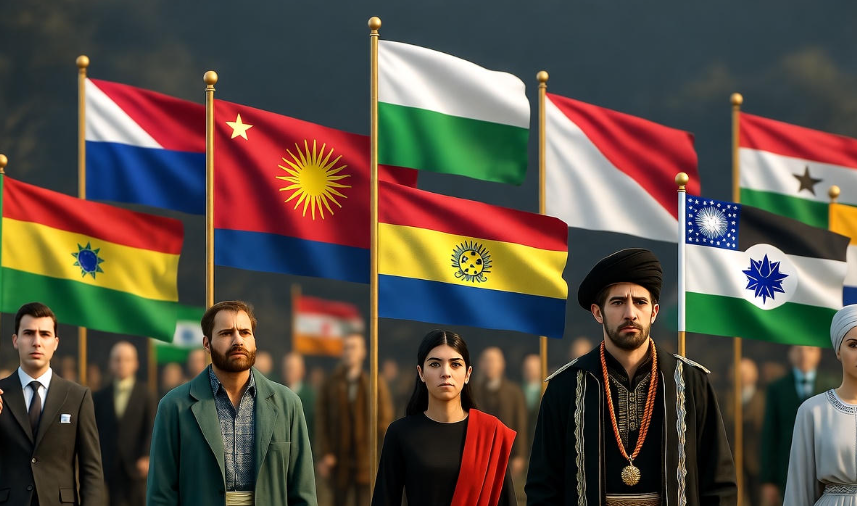


Have you ever heard of a country that doesn’t exist on the world map but still has its own flag, laws, or even currency? 🌍 Sounds strange, right? These are called micro nations — small, self-declared states that claim independence but are not recognized by any major government or international body like the United Nations.
Now the big question is: how do they even survive without recognition?
Let’s dive into this fascinating world of tiny nations that live on dreams, passion, and purpose rather than political validation.
What Are Micro Nations?
A micro nation is a self-proclaimed entity that operates as if it were an independent country but lacks legal recognition from established nations.
These communities may consist of a few people, a family, or sometimes an entire group united by a shared ideology.
Here’s a small table to understand the difference:
| Type | Description | Example |
|---|---|---|
| Recognized Nation | Official country acknowledged by the UN and other states | France, Japan, Pakistan |
| Micro Nation | Self-declared state, not recognized legally | Sealand, Molossia, Liberland |
| Microstate | Very small but recognized sovereign country | Monaco, Vatican City |
While a microstate is real and recognized, a micro nation is more symbolic — existing in a legal gray area.
Why People Create Micro Nations 🏰
It might sound funny, but many micro nations start because of curiosity, protest, or passion.
Some people are tired of government control and want to build a world of their own. Others do it for art, humor, or tourism.
Common motivations include:
-
Political protest – Disagreeing with national laws or taxes.
-
Cultural preservation – Keeping a language or tradition alive.
-
Artistic expression – Treating the nation as a creative project.
-
Economic experimentation – Testing new financial or social systems.
-
Community building – Forming a like-minded group with shared values.
Living Without Recognition: The Real Challenge
Being unrecognized means a micro nation cannot:
-
Sign treaties
-
Have embassies
-
Get foreign aid
-
Issue passports that are accepted internationally
-
Be part of the global economy officially
So how do they survive? The answer lies in creativity and self-reliance.
1. Self-Sufficiency and Local Economy 💰
Most micro nations rely on local resources and online income.
They often sell items like stamps, coins, souvenirs, and even citizenship certificates. Some turn their independence into a brand!
For example:
-
The Principality of Sealand sells noble titles like “Lord” or “Lady” online.
-
The Republic of Molossia runs a small gift shop and tourism service.
-
Liberland promotes cryptocurrency and online registration for “digital citizens.”
| Micro Nation | Source of Income | Unique Idea |
|---|---|---|
| Sealand | Selling titles, merchandise | Offshore kingdom vibe |
| Molossia | Tourism, stamps | Quirky humor and openness |
| Liberland | Digital citizenship, crypto | Blockchain governance |
This approach makes them economically independent — even if symbolically.
2. Smart Use of the Internet 🌐
Micro nations survive by existing online as much as offline.
They build websites, run social media pages, and create digital passports.
For many, the internet is their territory — a digital nation that needs no land.
Platforms like Discord, Reddit, and Twitter (X) host communities of citizens and supporters. Some even host online parliaments and elections!
In short, the web gives them visibility, voice, and validation, even without official recognition.
3. Tourism: Turning Dreams into Income ✈️
A few micro nations attract curious travelers who want to visit something truly unique.
They offer guided tours, ceremonies, and official-looking passports for fun.
For example:
-
Molossia (USA) welcomes visitors a few times a year with customs stamps.
-
Sealand, located on an old sea fort, allows visits via helicopter or boat (though rare).
-
The Republic of Uzupis (Lithuania) has become a famous bohemian tourist district with its own quirky constitution.
Tourism gives them both revenue and recognition — not legally, but socially.

4. Diplomatic Humor and Soft Power 😄
While they can’t be part of the UN, micro nations often form their own alliances or “Intermicronational organizations.”
These groups allow micro nations to:
-
Exchange cultural ideas
-
Host mock summits
-
Recognize each other diplomatically
It’s like a mini United Nations — but full of creativity and good humor.
This sense of community keeps the micro nation movement alive and connected.
5. Strong National Identity and Symbolism 🇺🇸
Every micro nation takes symbolism seriously — they design:
-
National flags
-
Anthems
-
Constitutions
-
Seals
-
Coins and stamps
Even if these symbols are unofficial, they give citizens a sense of belonging and pride.
It’s more about identity than legality. People feel part of something bigger — even if that “bigger” is very small.
-
📜 Dive into the lost papers of forgotten countries — Explore more: Exploring Historical Documents of Lost Micro Nations
6. Legal Loopholes and Clever Positioning ⚖️
Many micro nations are built on unused land, abandoned forts, or offshore structures.
They often rely on legal gray areas — places where no clear national claim exists.
For example:
-
Sealand was created on an old British sea fort in international waters — beyond the UK’s legal jurisdiction.
-
Liberland was declared on a small piece of land between Serbia and Croatia that neither country officially claimed.
By exploiting these gaps, they remain hard to challenge or remove.
7. Online Citizenship Programs 👥
To grow their population (and revenue), many micro nations offer “digital citizenship” programs.
People from anywhere in the world can apply online to become citizens — usually by filling out a form and paying a small fee.
This gives:
-
A sense of community
-
Access to virtual events
-
The right to vote in mock elections
-
A fun identity to show online
It also brings donations and attention — keeping the nation alive financially.
8. Art, Humor, and Freedom of Expression 🎨
Many founders see their micro nations as art projects or social experiments.
They challenge the idea of what a “nation” truly means.
Some do it to protest global bureaucracy; others simply enjoy the freedom of creating their own rules.
It’s both a statement and a celebration of creativity.
Examples include:
-
The Kingdom of Lovely (UK) – started as a comedy TV show but attracted real followers.
-
The Republic of Užupis (Lithuania) – an artistic neighborhood that jokingly declared independence to promote creativity and tolerance.
Through humor and art, they survive — not by force, but by imagination.
9. Media Attention and Pop Culture Exposure 📺
Every time a documentary, YouTube video, or news article covers them, these micro nations gain publicity and legitimacy.
The curiosity factor draws more people to their websites, boosting tourism and sales.
In fact, some micro nations became so famous online that they now have more followers than small towns!
This shows how media power can sustain an unrecognized country’s dream.
10. A Sense of Purpose ❤️
At the core, micro nations survive because their founders truly believe in their purpose.
Recognition is not their goal — existence is.
They prove that you don’t need international approval to express identity, creativity, or belief.
As one micronationalist said:
“We might not exist on your map, but we exist in our hearts.”
Table: How Micro Nations Stay Alive
| Survival Method | Example | Description |
|---|---|---|
| Selling titles | Sealand | Nobility certificates fund operations |
| Tourism | Molossia | Visits and souvenirs sustain economy |
| Online presence | Liberland | Crypto citizenship and global reach |
| Art and humor | Užupis | Symbolic independence promotes creativity |
| Legal loopholes | Sealand, Liberland | Use unclaimed or international lands |
| Community | Digital nations | Shared ideology keeps them active |
Interesting Fact 💡
Some micro nations are even older than many real countries! For instance, Sealand was founded in 1967 — over 55 years ago — and still stands strong today.
Why Recognition Isn’t Everything
You might think being unrecognized means failure. But for many micro nations, recognition is not the goal — it’s the journey that matters.
They exist to:
-
Challenge how we define sovereignty
-
Inspire creativity
-
Promote freedom of thought
-
Build alternative communities
In a world full of borders, they remind us that imagination has none.
The Philosophy Behind Their Survival 🧠
If you look deeper, micro nations are more than just “mini countries.”
They are experiments in human belief. When a group of people agrees that something is real — even if no one else does — it gains power.
Their survival shows:
-
Belief can create a reality.
-
Recognition is social, not just legal.
-
Community can thrive even without global validation.
It’s the power of collective imagination.
The Future of Micro Nations 🚀
With the rise of the internet, blockchain, and AI, the future of micro nations looks bright.
We may soon see “virtual nations” — countries that exist entirely online, using digital currency, smart contracts, and cloud governance.
Imagine:
-
Voting through blockchain
-
Borderless citizenship
-
Governments built on code, not paper
The micro nations of today might be the pioneers of tomorrow’s digital sovereignty.
Frequently Asked Questions (FAQs) ❓
Q1. Are micro nations legal?
Not exactly. They operate in a gray area — they are not recognized, but most governments ignore them as long as they don’t break any laws.
Q2. Can I start my own micro nation?
Yes, anyone can declare one. But getting recognition or sovereignty is nearly impossible. Still, it’s a fun way to express creativity or community.
Q3. Do micro nation passports work?
No, they are not valid for travel. They are symbolic souvenirs or collector’s items.
Q4. What is the most successful micro nation?
The Principality of Sealand is often considered the most successful because it has lasted over 50 years, with a clear territory and international attention.
Q5. Why don’t big countries stop them?
Because most micro nations are harmless, tiny, and non-threatening. Governments usually view them as curiosities, not challenges.
Q6. How many micro nations exist today?
There are hundreds worldwide, though only a few are active or well-known. Many exist only online.
Final Thoughts 🌏
So, how do micro nations survive without recognition?
Through creativity, community, and conviction.
They show that you don’t always need a government’s approval to live your dream — just enough people who share it with you.
Micro nations may be small in size, but their spirit is bigger than borders.
They live in the cracks of legality but thrive in the heart of imagination.
Perhaps the lesson is simple — real independence starts within. ❤️