
Ever heard of a micronation? It’s not quite a country but more than just an idea. Micronations are small, self-declared entities that claim to be independent—sometimes for fun, sometimes for political statements, and other times just because someone dreams big. 🌏
They usually have their own flags, national anthems, and even passports (though not legally recognized). While most fade away quickly, a few manage to survive—and even thrive. So, let’s travel continent by continent and see which of these tiny dream nations have actually made it big.
Europe – Sealand 🇬🇧
When it comes to successful micronations, Europe is the home of the famous Principality of Sealand. Located on an old sea fort about 12 kilometers off the coast of England, Sealand was founded in 1967 by Paddy Roy Bates, a former British major.
He occupied the platform, declared independence, and even named himself Prince Roy. What makes Sealand stand out is that it has survived legal battles, invasions, and time itself. It even has its own currency (the Sealand Dollar), stamps, and online citizenship programs.
A fun fact — Sealand was once used for pirate radio broadcasting and later became a data haven for hosting secure servers.
| Feature | Details |
|---|---|
| Founded | 1967 |
| Founder | Paddy Roy Bates |
| Location | North Sea, off the coast of Suffolk, England |
| Currency | Sealand Dollar |
| Motto | “E Mare Libertas” (From the Sea, Freedom) |
It’s tiny, yes, but Sealand remains the symbol of independence and creativity.
North America – Molossia 🇺🇸
Tucked away in Nevada, USA, there’s a small desert territory known as the Republic of Molossia. Founded by Kevin Baugh in 1977, Molossia is one of the most charming and humorous micronations in the world.
Kevin, who styles himself as His Excellency President Baugh, runs Molossia with a great sense of pride—and humor. It has its own currency (the Valora, based on cookie dough!), time zone, and even an official “space program.”
Visitors can actually tour Molossia (yes, with an appointment). It even celebrates national holidays and enforces funny laws—like banning walruses. 🦭
| Feature | Details |
|---|---|
| Founded | 1977 |
| Founder | Kevin Baugh |
| Location | Nevada, USA |
| Currency | Valora |
| Area | About 11 acres |
What makes Molossia special is not its size, but its heart. It stands for fun, creativity, and imagination—a true reflection of what micronations are all about.
Asia – Asgardia 🚀
Asia’s most futuristic and ambitious micronation is Asgardia, also known as the Space Nation. Founded in 2016 by Russian scientist Dr. Igor Ashurbeyli, Asgardia’s mission is nothing less than to create a peaceful society in space.
Sounds like science fiction? Maybe. But Asgardia already has more than 1 million registered citizens worldwide, its own constitution, and even a satellite in orbit called Asgardia-1.
Unlike traditional micronations, Asgardia isn’t bound to land—it’s about humanity’s next step into the stars. 🌠
| Feature | Details |
|---|---|
| Founded | 2016 |
| Founder | Igor Ashurbeyli |
| Concept | Space-based nation |
| Citizens | Over 1 million online |
| Symbol | Asgardia-1 Satellite |
It might not have borders or land, but Asgardia has a vision that could shape the future of civilization itself.
Africa – Kingdom of EnenKio 🇰🇮
Africa has fewer micronations, but the Kingdom of EnenKio is one of the most well-known. Although it’s associated with a small atoll near the Marshall Islands (Oceania region), its founder Robert Moore claimed ties to the African continent through his diplomatic ventures and citizenship offers.
EnenKio calls itself the “First Nation of the Marshall Islands”, claiming independence since the 1980s. It issued passports, stamps, and currency—but later faced controversy for being labeled as a scam by some authorities.
Even so, EnenKio’s structure—complete with ministries, royal titles, and public services—was incredibly detailed.
| Feature | Details |
|---|---|
| Founded | 1987 |
| Founder | Robert Moore |
| Claimed Territory | EnenKio Atoll |
| Type | Monarchy |
| Recognition | None officially |
Despite its struggles, EnenKio represents how micronations often emerge from the desire for sovereignty and self-identity—even in remote regions.
Oceania – Principality of Hutt River 🇦🇺
Oceania has been home to many small self-declared nations, but none more famous than the Principality of Hutt River in Western Australia.
It was founded in 1970 by Leonard Casley, who declared independence from Australia after a dispute over wheat quotas. The Australian government tried to ignore it, but Casley maintained his claim for 50 years!
Hutt River became a tourist attraction, issuing passports, stamps, and coins. It even had its own royal family, making it one of the most organized and economically active micronations ever.
| Feature | Details |
|---|---|
| Founded | 1970 |
| Founder | Leonard Casley |
| Location | Western Australia |
| Type | Principality |
| Ended | 2020 (formally dissolved) |
Though it officially closed in 2020 due to tax issues, Hutt River remains legendary in the world of micronations—a story of resilience and peaceful protest.
South America – Principality of Nueva Roma 🇦🇷
In South America, one of the more structured micronations is Nueva Roma, founded in Argentina. This micronation draws heavy inspiration from the Roman Empire, combining classical culture with modern independence ideals.
Nueva Roma maintains a government system similar to the ancient Roman Senate, issues coins, and promotes art, philosophy, and literature.
Its citizens view it as both a cultural and political experiment, trying to revive the Roman spirit in the modern world. 🏛️
| Feature | Details |
|---|---|
| Founded | 2005 |
| Location | Argentina |
| Type | Principality |
| Motto | “Virtus et Gloria” |
| Focus | Culture & History |
While not widely known, Nueva Roma stands out because it blends history, education, and identity into something that feels both ancient and new.
Antarctica – Westarctica ❄️
Now, let’s travel south to the icy lands of Antarctica—where one of the most fascinating micronations exists: Westarctica.
Founded in 2001 by Travis McHenry, Westarctica claims a vast unclaimed region of Antarctica known as Marie Byrd Land. It was created to promote awareness of environmental issues and responsible governance of unclaimed territories.
Westarctica even has noble titles, a charity organization, and a growing citizen base of over 2,000 people worldwide.
| Feature | Details |
|---|---|
| Founded | 2001 |
| Founder | Travis McHenry |
| Claimed Area | Marie Byrd Land (Antarctica) |
| Citizens | 2,000+ |
| Focus | Environmental and humanitarian work |
It’s a perfect example of how micronations can move from fantasy to meaningful action—Westarctica uses its platform for real-world causes. 🌿
Comparison Table of Successful Micronations 🌐
| Continent | Micronation | Year Founded | Type | Known For |
|---|---|---|---|---|
| Europe | Sealand | 1967 | Principality | Sea fort independence |
| North America | Molossia | 1977 | Republic | Humor and tourism |
| Asia | Asgardia | 2016 | Space Nation | Digital citizenship |
| Africa | EnenKio | 1987 | Monarchy | Symbolic sovereignty |
| Oceania | Hutt River | 1970 | Principality | Economic independence |
| South America | Nueva Roma | 2005 | Principality | Cultural revival |
| Antarctica | Westarctica | 2001 | Duchy | Environmental efforts |
Why Micronations Matter 🌱
It’s easy to dismiss micronations as jokes—but that’s missing the point. Many of them symbolize freedom, individual expression, and the human spirit to create something unique.
They show that even a small group of people—or sometimes one person—can build a world from imagination, law, and belief.
Micronations teach us that nationhood isn’t always about borders. Sometimes, it’s about ideas, values, and vision.
Interesting Facts 🧭
-
The smallest micronation, Sealand, is roughly the size of two tennis courts.
-
Molossia has an official war—against East Germany (even though East Germany doesn’t exist anymore).
-
Asgardia holds elections online and has a digital parliament.
-
Hutt River once issued its own driver’s licenses and university degrees.
-
Westarctica has diplomats and hosts charity events for climate change awareness.
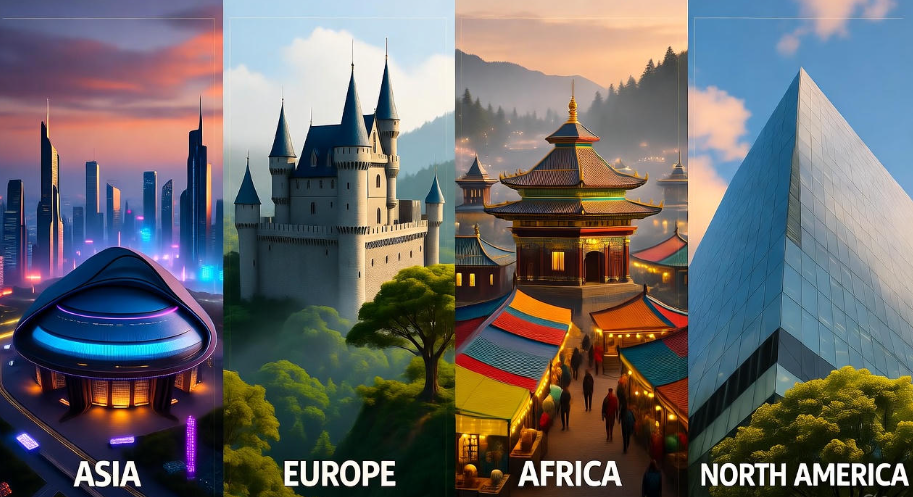
Most Successful Micro Nations by Continent
Frequently Asked Questions (FAQs) ❓
1. What is a micronation exactly?
A micronation is a self-declared independent entity that claims to be a country but isn’t officially recognized by governments or international bodies like the UN.
2. Are micronations legal?
Mostly yes. As long as they don’t commit fraud, claim land illegally, or harm others, micronations are often seen as harmless hobbies or social experiments.
3. Can you become a citizen of a micronation?
Yes! Many micronations like Asgardia and Sealand allow people to apply for citizenship online. Some even offer digital passports.
4. Which micronation is the richest?
While none are financially powerful, Sealand and Hutt River earned income through tourism, souvenirs, and online activities.
5. Which micronation is the largest by land area?
That would be Westarctica, which claims about 1.6 million square kilometers of Antarctica—though, of course, it’s not officially recognized.
6. Can micronations become real countries?
In theory, yes—but it’s extremely difficult. Recognition by other nations and the UN is essential, which rarely happens.
Final Thoughts 💭
From Sealand’s sea fort kingdom to Asgardia’s dream of space citizenship, micronations are tiny sparks of creativity in a big, bureaucratic world.
They might not have armies or official status, but they have something even more powerful—imagination.
Every continent, it seems, has people who dare to say, “This is my nation.” Whether it’s a desert outpost, a platform at sea, or a digital realm floating among the stars—these micronations remind us that the human spirit knows no boundaries. 🌍✨