
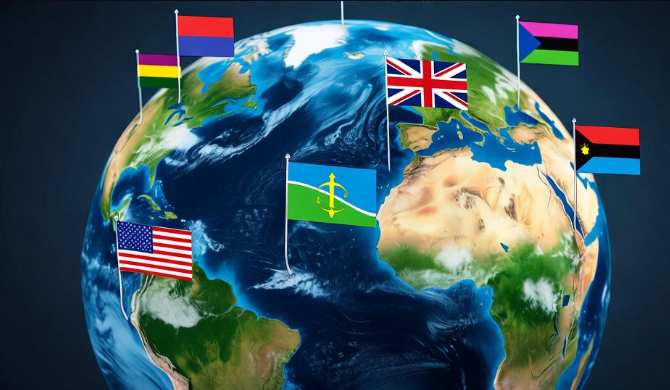
Have you ever heard of a country that isn’t really a country — but still calls itself one? 😄 Welcome to the fascinating world of micronations — tiny self-proclaimed countries that exist outside the recognition of the world’s major governments. From backyard empires to virtual kingdoms, the number of micronations has quietly grown through the years.
But how many of them actually exist in 2025? 🤔 Let’s explore this curious question in detail — with facts, examples, and even some surprises.
What exactly is a micronation?
Before we count them, let’s understand what a micronation really is.
A micronation is a small, self-declared entity that claims to be an independent nation — but isn’t recognized by other countries or the United Nations.
These mini “countries” often:
-
Have their own flag, anthem, and constitution 🇺🇳
-
Issue passports or stamps (sometimes just for fun)
-
Have a founder who calls themselves king, president, or emperor 👑
-
Exist mostly online, or on private land, or even just as a symbolic idea
So, while they may not appear on official world maps, they still exist in the minds, efforts, and creativity of their founders.
How many micronations exist in 2025?
The exact number can be tricky to determine — because new ones appear every year while others disappear quietly.
According to updated community surveys and independent researchers who track these entities (like the Micronations Wiki and MicroWiki community), there are roughly:
More than 400 active micronations worldwide in 2025.
But if we include inactive or symbolic ones, the number could go beyond 700.
Here’s a quick breakdown:
| Type of Micronation | Estimated Number (2025) | Example |
|---|---|---|
| Active and organized | 150–200 | Sealand, Molossia, Atlantium |
| Online or virtual micronations | 120–180 | Wirtland, Obscurium, R.O.P. |
| Cultural or symbolic communities | 70–100 | Celestia, Gay and Lesbian Kingdom |
| Dormant / inactive micronations | 200+ | Flandrensis, Austenasia (partially) |
So, depending on how we define existence, there are 400–700 micronations in 2025, with new ones forming every few months.
Why are people creating micronations?
You might think creating your own country sounds childish or rebellious — but the reasons behind it are surprisingly deep and varied.
Here are a few common motivations:
-
Political protest:
Some people create a micronation to express dissatisfaction with government systems. It’s a peaceful way to say, “We can do things differently.” -
Artistic expression:
Others see it as a creative project — a mix of politics, art, and performance. -
Community and belonging:
Some create micronations to bring like-minded people together — whether around a hobby, belief, or cause. -
Tourism or fun:
Certain micronations attract visitors, sell stamps, or host events. It becomes both a hobby and a small business. -
Virtual world expansion:
The internet has made it easy to build digital nations where people “join” online without borders.
Micronations, in short, reflect human imagination — our natural desire to build, rule, and belong.
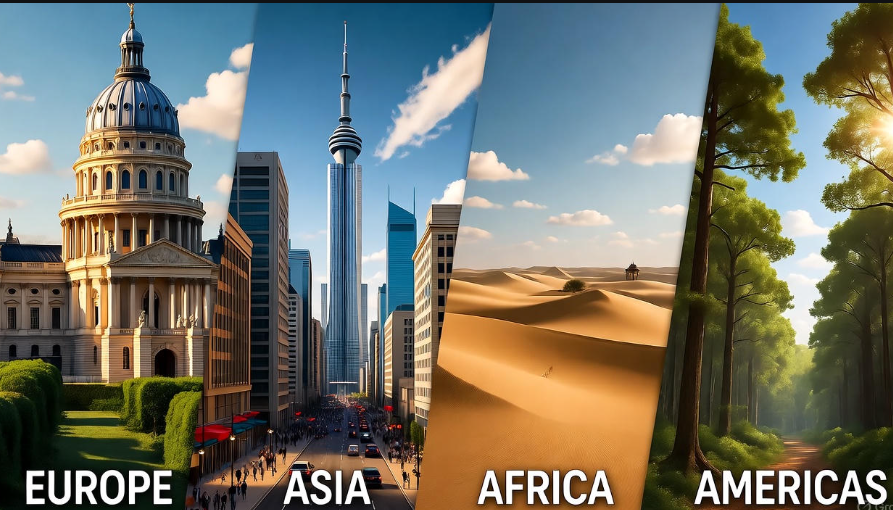
Where are these micronations located? 🌍
You might imagine them hidden in deserts or floating islands — and sometimes they are! But most are located inside existing countries.
Let’s look at the regions where they are most common in 2025:
| Region | Estimated Active Micronations (2025) | Popular Examples |
|---|---|---|
| Europe | 160+ | Sealand (UK), Molossia (US roots but global influence), Flandrensis (Belgium) |
| North America | 100+ | Molossia (Nevada), Lovely (UK-origin but online) |
| Asia | 50–70 | Wirtland (virtual), Naminara (South Korea) |
| Oceania | 30–40 | Atlantium (Australia), Hutt River (former) |
| Africa | 20–30 | EnenKio (Marshall Islands claim), Obscurium |
| Online-only (global) | 100+ | Digital micronations and roleplay states |
Famous micronations still active in 2025
Here are some well-known micronations that have managed to stay active and gain fame even in 2025:
-
Principality of Sealand (UK)
-
Founded in 1967 on an abandoned sea fort.
-
Has its own flag, motto, passports, and even a soccer team.
-
Still ruled by the Bates family.
-
-
Republic of Molossia (USA)
-
Located in Nevada, founded by Kevin Baugh.
-
Has a navy, currency (Valora), and hilarious laws.
-
Operates like a mix of humor and history.
-
-
Empire of Atlantium (Australia)
-
Claims to be a global micronation with citizens worldwide.
-
Promotes human rights and individual sovereignty.
-
-
Republic of Flandrensis (Belgium)
-
Focused on climate awareness — claims uninhabited land in Antarctica.
-
Known for eco-diplomacy and humor.
-
-
Principality of Seborga (Italy)
-
A real town that claims to be independent from Italy.
-
Locals even elect a “Prince.”
-
-
Wirtland (Online)
-
A virtual country that exists entirely on the internet.
-
Offers digital citizenship to anyone.
-
-
Grand Duchy of Westarctica (Antarctica)
-
Founded to raise awareness about climate change.
-
Claims Marie Byrd Land in Antarctica.
-
These micronations have websites, news, and sometimes even embassies — proving that even imaginary borders can spark real communities.
How are micronations different from microstates?
Many people confuse micronations with microstates like Monaco, Liechtenstein, or San Marino. But they are quite different.
Here’s a small table to clarify the difference 👇
| Feature | Micronation | Microstate |
|---|---|---|
| Recognition | Not recognized internationally | Fully recognized by the UN |
| Size | Can be as small as a room | Small but official country |
| Example | Sealand, Molossia | Monaco, San Marino |
| Government | Self-declared | Constitutional or hereditary |
| Currency | Often symbolic | Legal tender |
| Legality | Often symbolic or tolerated | Fully legal and sovereign |
So, in short — a micronation acts like a country, while a microstate is one.
Do any micronations have citizens?
Yes! Many do — although citizenship is usually honorary or symbolic.
Some, like Wirtland, have thousands of registered citizens online. Others, like Molossia, have just a few family members.
The average micronation has fewer than 100 citizens, most of whom interact through online platforms or events.
Can a micronation ever become a real country?
It’s very unlikely — but not impossible.
History shows rare cases where breakaway states became recognized nations (like South Sudan or Kosovo), but those had major political backing and territory.
Micronations, on the other hand, mostly focus on symbolic independence. However, a few have achieved partial recognition or tourist fame — enough to sustain themselves for decades.
Why 2025 is a unique year for micronations
2025 marks a fascinating phase for micronations:
-
Technology (AI, blockchain, and Web3) has enabled virtual governance systems.
-
Environmental activism has inspired eco-states like Flandrensis and Westarctica.
-
Social media has made it easier than ever to recruit “citizens” or sell passports.
-
Pandemic-era isolation inspired hundreds of new online micronations during and after COVID-19.
So, in 2025, the micronation movement isn’t dying — it’s transforming. 🌱
Fun facts about micronations 🧠
| Fact | Details |
|---|---|
| The smallest micronation | The Kingdom of North Dumpling (just a private island owned by inventor Dean Kamen). |
| Longest surviving micronation | Sealand (since 1967). |
| Most citizens | Wirtland (over 3,000 virtual citizens). |
| Weirdest law | In Molossia, plastic bags are banned but cookies are tax-free! 🍪 |
| Most serious purpose | Westarctica and Flandrensis both promote climate awareness. |
Challenges micronations face
While they sound fun, running a micronation isn’t easy. Some of the biggest challenges include:
-
Lack of legal recognition
-
Financial costs (websites, printing passports, events)
-
Disputes with real governments
-
Loss of interest over time
-
Internal politics among members
Yet, the people who create and maintain these mini-countries rarely give up. For them, it’s not about power — it’s about passion.
The future of micronations
The future looks surprisingly bright!
By 2030, experts predict that there could be over 1,000 active micronations, especially digital ones.
With the rise of blockchain-based identity systems, it’s possible that future micronations will:
-
Issue crypto passports 🪪
-
Use decentralized currency
-
Operate as online governments
-
Attract global “digital citizens”
So, who knows? Maybe one day you’ll join or even start your own micronation.
FAQs about Micronations (2025 Edition)
Q1. What is the oldest micronation still existing in 2025?
A: The Principality of Sealand, founded in 1967, holds that title. It’s located on a sea fort off the coast of England.
Q2. Can I create my own micronation legally?
A: Yes — as long as you don’t break local laws or claim land illegally. Many start online or on private property.
Q3. Are micronations recognized by the United Nations?
A: No. The UN only recognizes sovereign states that meet international criteria.
Q4. How many micronations are active in 2025?
A: Around 400–700, depending on how you count virtual or dormant entities.
Q5. Do any micronations have their own military?
A: Some claim to, but it’s symbolic — like Molossia’s “navy” or Sealand’s “guard.”
Q6. Can I become a citizen of a micronation?
A: Absolutely! Many offer online registration or honorary titles for free or a small fee.
Q7. Which micronation is the most famous in the world?
A: Sealand and Molossia are the most well-known, thanks to documentaries and news coverage.
Final Thoughts 🌏
So, how many micronations exist in 2025?
The answer — around 400 active and 700 total — tells us something important: human creativity never stops.
In a world of strict borders and big politics, these tiny self-made countries are symbols of imagination, independence, and humor. Whether it’s an island, a website, or someone’s backyard — micronations remind us that the dream of sovereignty can be as small as a room but as big as an idea.
Who knows… maybe your living room is the next great kingdom waiting to be born. 👑✨