
Now imagine for the rest of your life you said your bedroom was a country. Sounds silly, right? But that hasn’t stopped thousands of people around the world from doing just that, establishing their own “micro nations” with flags, currencies and even passports. Most governments treat these mini self-proclaimed nations as jokes or hobbies, but something more interesting is going on under the surface.
Micro nations may sound like playful fun runs, but in fact they are testing grounds for audacious ideas about what counts as a good government, community, identity. From a platform in the North Sea to a desert site a father has claimed for his daughter, these miniature nations are trying things fit of which bigger countries are usually not able — or willing — to try. And surprisingly, some of their experiments are going so well.
Today’s topic will revolve around the 5 strong lessons that developed countries could learn from these peculiar micro states. Whether creating stronger communities, slicing through red tape or coming up with clever solutions to today’s problems, micro nations are showing how size doesn’t matter when it comes to innovation. Let’s find out what it looks like when you make a country small and just begin again.
What Exactly Are Micro Nations?
Before we get into the lessons, let’s be clear about what we’re discussing. A micro nation is a little entity that says it’s an independent country but isn’t recognized by world governments or significant international organizations like the United Nations.
These are not the kind of small and obscure countries one thinks of when they think about Monaco or San Marino. Those are actual countries with U.N. seats, and diplomatic ties. Micro nations inhabit a gray zone — they have all the trappings of statehood (constitutions, leaders, symbols) and none of its legal standing.
Some famous examples include:
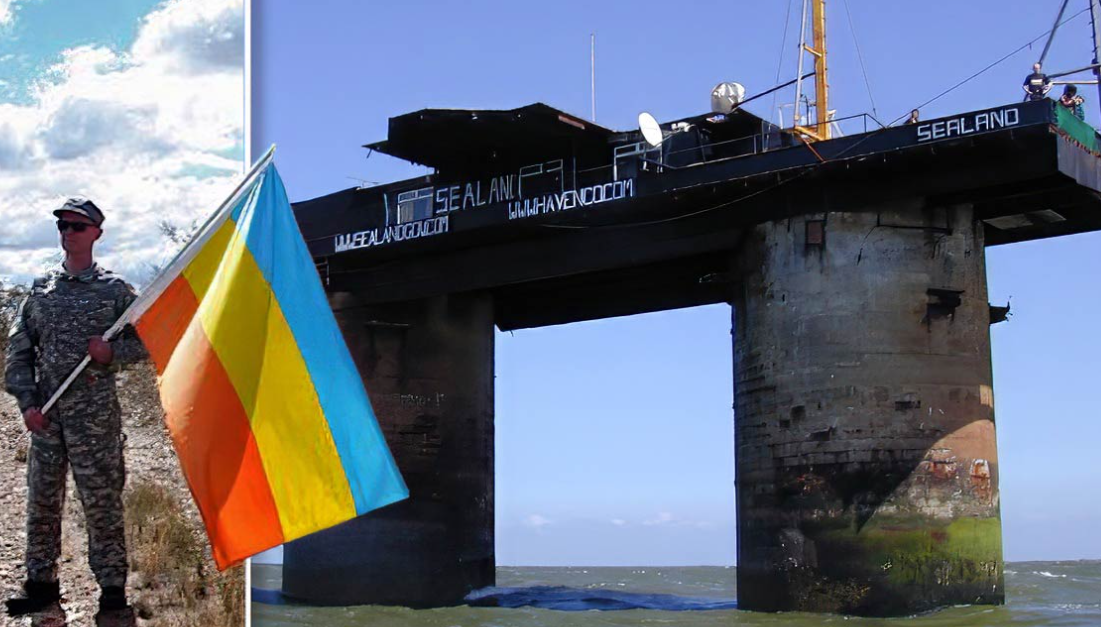
Sealand: A World War II sea fort outside the coast of England claimed as a sovereign nation since 1967
Molossia: A Nevada property that seceded from the United States
Liberland: A disputed territory between Croatia and Serbia that was claimed in 2015
Hutt River Province: An Australian farm that unilaterally declared independence in 1970 (and ceased operations in 2020)
Most micro nations begin as protests against government policies, artistic projects or just fun experiments. But within these small domains, there is some exciting innovation happening.
Lesson 1: Community Doesn’t Have to Be Imposed From Above
Perhaps the most curious thing about successful micro nations is how they manage to build up ultra-tight-knit communities without any means of real enforcement. They can’t tax you against your will, arrest you or compel you to attend. But those are the circumstances people actively opt into.
Why This Is Important for Real Countries
The larger the nation, the more it tends to depend on laws, fines and punishment to ensure citizens get along. Some rules are needed, but it can breed a kind of disconnection and resentment from people to their government. People start to see themselves as objects that are being ruled and not as citizens of a society.
Micro nations flip this script. Consider the Republic of Molossia, for instance. Its residents (the founder’s relatives and a couple of online followers) join because they really do want to. They observe Molossian holidays, spend Valora currency (pegged to cookie dough) and abide by the nation’s eccentric laws — all voluntarily.
Practical Applications
Real countries could learn to:
| Traditional Approach | Micro Nation-Inspired Approach |
|---|---|
| Force compliance through penalties | Engender true buy-in through involvement |
| Top-down, “we made the decisions” | Involve citizens in meaningful ways |
| Emphasis on rules and restrictions | Build identity around shared values |
| Treating citizens as subjects | Encouraging them to be active members |
Some of these real-world examples are already beginning to crop up. Programs like participatory budgeting in cities such as Porto Alegre, Brazil, allowed residents to decide directly how their city’s money is spent. These programs exhibit greater civic engagement and satisfaction because people feel ownership over the decisions.
Nations could further apply this thinking by:
- Creating additional opportunities for citizen input on local subjects
- Building national identity through shared values as opposed to relying only on laws
- Realizing that free obedience is stronger and more enduring than compulsory obedience
- Creating programs that get people excited about participating in civic life
The lesson of the micro nation here is simple but profound: give people the sense that they belong to something larger and more consequential than their own narrow wants, needs and grievances, and they will provide you with a great deal more in cooperation and altruism than any law could ever force out of them.

Lesson 2: Bureaucracy Isn’t Inevitable
Step into the offices of any government in a big country, and you will soon experience piles of forms, layers upon layers of departments, long wait times, and procedures that seem to have been designed for amusement — their own. We’re now resigned to the assumption that government equals bureaucracy.
Micro nations are evidence that does not have to be the case.
How Micro Nations Stay Nimble
Sealand has been run for more than 50 years with almost no administrative apparatus. Want citizenship? There’s a straightforward process. Need to resolve a dispute? It goes directly to leadership. No maze of agencies, no months of waiting.
This is not just because they’re little, it’s because they are engineered with simplicity in mind from the get-go. When you start a nation from zero, you’re not saddled with centuries’ worth of rules, departments and functions built up. You should be wondering: “What do we actually need?”
The Bureaucracy Trap
In real countries, of course, there is a tendency for things to turn into what experts call “bureaucratic accumulation.” A new rule must be created for every problem. Every scandal spawns a new agency of oversight. Every department defends its existence. Over the decades, this creates systems so complex that not even government employees themselves have a full command of them.
Consider these shocking statistics:
- U.S. federal tax code is more than 73,000 pages
- The average small business operation in the United States now has over $12,000 tied up annually just complying with government mandates
- Americans devote some 8.9 billion hours a year to filling out forms for the government
What Countries Could Do Differently
Micro nations prove that government doesn’t need to be so bureaucratic if they:
Begin with human needs, not government departmental boundaries: Structure services based on what people actually need to do, rather than which organization does things for people.
Embrace digitization thoughtfully: A lot of micro nations are primarily online, with simple websites and digital tools rather than physical offices.
Sunset old rules: If a regulation is older than 10 years and hasn’t been reviewed, perhaps it’s no longer necessary.
Measure ease: Measure how many steps citizens have to take to do routine things and strive for fewer.
There is a real-world model for such thinking in Estonia. The country digitized nearly all government services — citizens can vote and start businesses online in minutes. They actively stripped away bureaucratic steps, rather than merely digitizing cumbersome processes. Learn more about Estonia’s digital transformation.
What we can learn from micro nations: Complexity is not professionalism, and simplicity is not laziness. Sometimes the most advanced system is the one that stays out of everyone’s way.
Lesson 3: National Identity Is Something That Can Be Chosen, Not Just Inherited
Here is a question that most people never consider: Why are you a citizen of the country where you live? For the overwhelming majority of people, “born that way” becomes their answer. Well, micro nations utterly beg to differ.
A Micro Nation View of Citizenship
In many micro nations, you need to actually opt in to citizenship. Even if your parents lived somewhere doesn’t mean you’re a citizen. Instead, you apply because you believe in what that country stands for.
The microstate of Liberland on the Danube River has now attracted more than half a million citizenship applications from around the world. These applicants are not looking for tax benefits or the right to travel more easily — Liberland citizenship does not provide any of that. They are applying because they relate to Liberland’s values of personal freedom and small government.
This makes for a fundamentally different citizen-country relationship. You are there because you want to be, because you picked it, because it resonates with your true self.
Why This Matters
Traditional citizenship is often a lottery. You, by random birth lottery, find yourself in a country with certain laws and culture and opportunities — none of which you get to select. This can produce citizens who are alienated from their nation or who remain only because it is hard to leave.
There are several interesting things that happen when citizenship is chosen:
Greater engagement: You get more participation from people who are there by choice
Common values: Citizens do share common principles, they were not simply thrown together randomly
Less Nationalism, More Patriotism: It’s no longer my country right or wrong; I give you my country because I believe its principles are worth fighting for.
Practical Applications for Real Countries
Big countries can’t act precisely like micro-nations here, obviously. Both borders and citizenship laws are important. But there are significant ways to get them included:
Flexible Citizenship Models: Canada and Australia already have points-based systems that favor people who show commitment to the nation’s values. This could be broadened to open the gates for individuals who enrich the country through its culture, innovation or community — even before they come in.
Citizenship Renewal: And what if citizenship were not automatic for all time? Voluntary “citizenship renewal” ceremonies every 10-20 years where people recommit consciously to the values of their country have been proposed by some experts. It would be purely symbolic — you wouldn’t lose citizenship if you didn’t participate — but it could help people feel more connected to their country in a more active way.
Digital Citizenship Alternatives: The e-Residency program in Estonia is designed to make it easy for people around the world to become digital residents (not full citizens, but close) and use Estonian services. More than 100,000 people have registered. This demonstrates that there is real demand for opted national membership outside conventional boundaries.
The underlying lesson: it is a more meaningful citizenship when people feel that they have chosen it rather than stumbled into it by accident of birth.
Lesson 4: You Don’t Have to Break Everything to Experiment
The hardest thing in a modern democracy is trying out new ideas. All policy changes affect tens of millions of people, cost hundreds of billions of dollars and make winners and losers in politics. This is what makes governments so terrified of experimentation.
Micro nations are the opposite: They’re almost entirely experimental.
Safe Spaces for Testing Ideas
Consider micro nations as governmental laboratories. Ready to explore a whole new economic system? Test it in a micro nation. Wondering if direct democracy is possible at all levels? Give it a whirl with 50 people before you try it with 50 million.
Here are some interesting experiments underway in micro nations:
Alternate Economic Systems: Talossa has tried a lot of different currencies and economies during its history of over 40 years. Although most of the experiments were symbolic, they did offer glimpses into how people think about money and value.
Digital Governance: There are many micro nations which operate primarily on the internet and pioneer new forms of governance that don’t rely on a certain patch of land. They’re asking questions that may prove important as more of human life migrates to the digital world.
Environmental States: Some micro nations have been established in order to experiment with radical environmental policies, which would be politically unfeasible in bigger countries. These are proof of concept for green policies.
-
💰 Thinking micro-nations can’t earn money? Think again — Explore: Can You Earn Money from a Micro Nation?
The Fear of Experimentation
Real countries hardly ever experiment, because the stakes seem too high. Politicians worry about:
- Taking the hit if something doesn’t work out
- The cost of reversing policies
- If experiments happen in some regions only, creating inequality
- The difficulty of testing policy A while deploying existing policy B
But that fear of experimentation may be as or more harmful than the experiments. Nations get stuck with systems that everyone knows are broken, because no one wants to be blamed for shaking things up.
How Countries Could Embrace Experimentation
Micro nations demonstrate you can pilot small before rolling out big:
| Challenge | Micro Nation Solution | Real Country Application |
|---|---|---|
| Policy uncertainty | Test with small group first | Create special economic zones for policy experiments |
| Political risk | Voluntary participation | Offer opt-in programs in select cities |
| Reversibility | Easy to end experiments | Build sunset clauses and clear evaluation criteria |
| Learning curve | Iterate quickly | Establish fast feedback loops |
Real-World Examples
This is already happening in some countries:
China’s Special Economic Zones: Shenzhen was a fishing village in which China tried out market reforms before adopting them across the country. Today it’s a city of 12 million and one of the world’s tech capitals.
Switzerland’s Direct Democracy: Any canton (state) that wants to can experiment with different policies, and they do, creating natural tests for what works before national policy.
Finland’s Basic Income Trial: The country experimented with universal basic income, enrolling 2,000 citizens before considering whether to roll out the program nationwide.
The micro nation lesson: you don’t have to completely revolutionize everything all at once. Begin small, experiment greatly, learn continuously and scale what works.
Lesson 5: Creativity Can Solve Problems Money Can’t
The last lesson of micro nations may be the most worthwhile: When you don’t have money, creativity is what you get. And sometimes these creative solutions are better than the expensive ones.
Resource Constraints Breed Innovation
Real countries frequently try to throw money at stuff. Need to boost civic engagement? Launch a multi-million-dollar ad campaign. Want to improve education? Build new facilities. These solutions can be effective, if imperfect.
Micro nations don’t have those resources. The whole of the Republic of Molossia’s territory may be worth $100,000. Sealand is a rusty platform. Liberland is a speck of disputed forest. Yet these nations have:
- Created vibrant online communities
- Attracted international media attention
- Inspired genuine loyalty among citizens
- Developed unique cultural identities
- Successfully operated for decades
How? Through creativity, personality and ideas — things anyone can have.
Examples of Micro Nation Creativity
Currency Innovation: Instead of attempting to create a “real” currency, Molossia links its Valora to Pillsbury cookie dough. This is both funny, practical (cookie dough does hold its value) and memorable. It receives much more attention, and contributes much more to national identity than a serious currency could.
Diplomatic Theater: Sealand once released a series of its own stamps and coins. By having collectors purchase them, they made money and cemented Sealand’s legitimacy. This was actually far more potent than any costly lobbying campaign.
Digital Community Building: Many micro nations are purely digital communities, forming a ‘nation’ only on social media at the cost of a domain or server.
Media Savvy: Micro nations know full well that attention is a resource. They are weird, exciting and media-friendly — as a result they receive millions of dollars worth of free publicity. Sealand has been covered in documentaries, books and countless articles — giving them worldwide recognition few small towns could ever dream of.
Lessons for Resource Management
Any country, even prosperous ones, has budget constraints. And money isn’t the solution to everything — some of the worst schools spend the most money per student, and there are poor countries that do amazing things with education.
It is an effectiveness that the micro nations have taught us can often come from:
Personality trumps polish: People respond to authentic, quirky and human government more than they do slick corporate-sponsored messaging
Stories over spending: Compelling stories excite more than costly campaigns
Personal involvement: Active engagement and caring personally is valued more than passive service providing
Less is more: In a lot of cases, the clearest and simplest message and system work best rather than adding layers to make it look “sophisticated”
Practical Applications
How might countries employ this logic by:
- Embracing who they are as opposed to trying to be “professional” and all the same
- Investing in storytelling about what makes their country special
- Creating low-cost systems to enable citizens to engage in governance and culture
- Measuring effectiveness, not just spending on government programs
- Encouraging experimentation with minimum resources rather than waiting for perfect funding
Rwanda offers an interesting example. With scarce resources, the country developed “Umuganda” — a day each month when everyone (yes, even the president) does community work. This costs next to nothing, but has contributed to the development of national unity, better infrastructure and a more robust civic culture.
The micro nation lesson: the best solution isn’t always the most expensive. Sometimes the constraints that bind you force you to find something even better.
Why These Lessons Are Especially Important Right Now
We are living through a time of strong declines in trust in government. All around the world, in democracies large and small, people are growing distant from their leaders, fed up with bureaucracy and suspicious of whether any political system will or even can solve the problems of the modern era.
Meanwhile, the demands of countries are growing more daunting: climate change, technological upheaval, inequality and polarization. Those problems demand new approaches, not merely more gargantuan versions of ones we already have.
Micro nations, odd as they are, have value: They’re laboratories for governance innovation that is going on right now. They’re trying out some ideas about community, identity and organization that might sound radical or naive but may contain solutions to the country’s most pressing problems.
Are micro nations perfect models? Obviously not. A majority of them are very small, homogenous entities that face none of the complex challenges associated with governing a multicultural population of millions. But that’s what makes them useful as thought experiments and testing grounds.
The five lessons we looked at — the importance of building voluntary community, the need to cut bureaucracy, choosing citizenship, learning to experiment safely and focusing on creativity instead of just resources — are not about copying micro nations as they exist today. They’re about understanding that some of our assumptions about exactly how countries are supposed to operate might be mistaken.
As we contemplate the future, it will be those countries who dare to interrogate their own received systems and learn from unexpected places. And every once in a while, the best ideas come from the littlest places.
Frequently Asked Questions
How does a micro nation differ from a small country?
A micro nation is a self-proclaimed entity that does not have the full attributes of a usual sovereign state. Small countries such as Monaco, Luxembourg and Singapore are independent sovereign states with full UN membership and diplomatic recognition. Micro nations are in a legal netherworld — they declare themselves to be independent, but aren’t recognized by the international community.
Are micro nations legal?
It’s complicated. Micro nations are, technically, not illegal in most places — but they’re also not accepted as states. If there’s a micro nation on your private property and nobody in the area notices or objects, so long as you aren’t breaking local laws (which could include licensing requirements for things like business activities) then the practice has been tolerated, overall seen as little more than a harmless hobby. Still, asserting sovereignty certainly doesn’t relieve you of all laws of the nation that your country belongs to — you still have to pay taxes, follow regulations and respect legal authority.
Can I create my own micro nation?
Technically, yes, but you’ll be hard-pressed to find anyone who considers it a country. People have established micro nations on private property, unclaimed land, artificial platforms and even online. But you’ll still be bound by the laws of whatever recognized country where your territory exists (assuming there is one). Creating a micro nation isn’t so much a way to evade government rule as it is an art project, political statement or entertaining pastime.
Have any micro nations ever gotten recognized for real?
Not really. Many micro nations have been in existence for decades and have gained international notoriety, however none is recognized by the United Nations or by any of the world’s major governments. The closest might be entities that began as unrecognized territories and groups that managed to claw their way through to recognition in the end, but these tended to be areas with historically large populations or genuine political movements, not just fresh declarations.
What is the purpose of forming a micro nation if no one will take notice?
People form micro nations for all sorts of reasons: political protest, artistic expression, experimentation in governance and community formation, just for fun, or making philosophical statements about authority or sovereignty. Recognition isn’t always the goal. Many who found micro nations are more interested in the creative and experiential elements than real sovereignty.
Can the ideas from micro nations be relevant for real countries?
Some already are. Ideas such as participatory governance, digital citizenship, special economic zones and streamlined bureaucracy have all been tried out in different nations with success. The real issue is in adapting the principles to bigger scale, not mimicking the micro nations precisely. Think of micro nations as concept cars — they explore what’s possible and inform real-world vehicles.
Why don’t governments take micro-nations seriously?
Most of the world’s governments see micro nations as relatively harmless oddities that don’t impinge on their power or legitimacy. They have no way of enforcing such claims, or sabotaging real governance, so there’s not much reason to officially recognize them. It could even legitimize them in ways governments would rather not. Why waste time arguing with them if there was any way around it?
Are there any successful micro nations?
Success depends on your definition. If by that you mean “recognized as a real country,” no. But if success is lasting for decades, forming engaged communities, attracting international attention or testing interesting ideas then there are many micro nations that have succeeded to a degree. Sealand has been around since 1967, and Molossia was founded in the 1970s; both still have lively communities and their own cultures.